menu

Learning to Challenge the Canon to Build Your Library (and Passport)

prender a desafiar el canon para construir la biblioteca

Reading and visiting the classics to develop your own taste

On my first European grand tour, I avoided the destinations that top most Latin Americans’ compass: Spain and Italy. I threw myself into -20 degrees, layers of snow I’d never seen, different cultures. It was entertaining from every angle. But only when I arrived in Italy the following year did I understand the magnet: it wasn’t just the romanticism of roots, it was the cultural density I had already sensed in books, the one I recognized from my education and heritage. Reading Dante, Cervantes, Virgil had been theory; in Italy it became landscape, and everything clicked.

Reviewing my library, I discovered that my first wave was, predictably, the canon we’re invited to read when diving into literature. There was García Márquez with his Macondo of cyclical violence, where magic was the only way to narrate Latin America. The Bloomsbury Group salons, where Virginia Woolf discussed how to live and write differently, and Huxley criticized with one foot inside. The North American fever of the twenties, between clandestine cocktails and sequined dresses. The critique of the continent’s bloody roots: Rulfo’s desert silence, Fuentes’ blood, Padura’s Havana. And before all that, Homer, navigating the Mediterranean of wandering heroes and endless journeys.

This is the undisputed foundation: it orients, gives clues, sometimes bores and sometimes ignites. But it’s the initial map that everyone must accept or challenge before drawing their own library. Most of the time, the canon becomes a lighthouse. From there we discover our own taste and deepen into a style of narrative (and travel). In my library, essay-novels shine, with The Magic Mountain and its thousand pages inviting me to debate about pre-WWI European cuisine. The great open book on the world map full of pins and desires is Rome, the city I’ve returned to twelve times. From the Roman world to the Renaissance, Baroque, and Republic, there’s no historical gap that doesn’t captivate me.

To fill myself with something, I need density. After readings and travels through the old and new world, I learned that what I enjoy goes beyond, that reflects as well as entertains, that has layers, and depending on life’s moment, can be enjoyed each time from a different angle.

I saw someone on social media recently wondering why Munich doesn’t figure in essential European itineraries, and I think the answer lies in the canon. The German narrative we learn leads us first to Berlin: the Wall, historical memory, the weight of the 20th century. But Munich is another Germany, equally dense: capital of Bavaria, mirror of its architecture, its gastronomic festivals and folk traditions. It knows how to embrace the present without denying the past. The reading that best reflects Munich in my library is, precisely, Thomas Mann. It combines Germanic roots, bourgeois elegance, tension with modernity, and that air of a city that drinks beer under chestnut trees while safeguarding Gothic painting collections, infinite libraries, and tech company headquarters. The Germany where tradition and modernity coexist in tension appears as a second layer, less evident but equally essential.

Indeed, building our own collection of books, stories, cultures, communities, cities, and landscapes requires audacity and energy. I don’t mean this snobbishly, but practically: it takes time, resources, and also curiosity.

Sometimes it even takes courage to answer uncomfortable questions when we stray from the route everyone expects: why are you reading that contemporary author and not Proust? Tuscany again when you haven’t been to Galicia? But that questioning Faust is mainly within us, with internal questions: do I invest my precious free time discovering if the French, Swiss, Italian, or Austrian Alps resonate with me? What if it’s all the same?

In that small example lies a world: which Swiss Alps am I talking about? The beauty and luxury of St. Moritz on the frozen lake, where horse carriages compete for prizes while we savor sparkling wine served by a waiter on ice skates? The ski and mountaineering life of Zermatt, the conscientious village where the few vehicles are electric, and the constant view of the Matterhorn reminds us that this is the nature we want to keep pristine?

Though I briefly visited St. Moritz three times, I would undoubtedly spend weeks and weeks in different seasons under the Matterhorn, walking its trails, gliding down slopes, discovering Italian faces and French peaks from above. It’s not that luxury discomforts me, but I didn’t find in it the vitality I found in Zermatt.

In photographs everything seems beautiful, no doubt. But living it, like turning the pages of a book, we discover what opens our curiosity. A curiosity fed by walks, questions to locals, readings, and where I find pleasure. The path can sometimes be heavy. There are fogs where we read or visit only because everyone else does. Soon comes that bloodhound moment when you smell what’s yours. By instinct, guided by booksellers, reader friends, travelers, or a curious friend like me, you can reach your truffle.

That’s how I found María Gainza: thoroughly porteña, art lover, social critic, autobiographical essayist who plays with literature. From the first pages of The Optic Nerve, I realized that those analyses of Buenos Aires museum artworks interwoven with slightly satirical autobiographical tales captivated me. The architectural beauty and political power of the Savoys’ brief kingdom that nevertheless unified Italy led me to Turin to eat gianduiotti (and white truffles in nearby Alba). Discovering these jewels, by myself, was worth every reading and every journey. The risk of being wrong is always in the air, but the reward is so great that I keep sniffing the wind, searching for the next treasure my nose will lead me to.

It’s not about collecting prestigious destinations or authors. It’s about recognizing what makes you feel more alive, more curious, more yourself.

What place or book made you understand you could draw your own map?
Don't miss any releases
our newsletter

Want to receive my newsletter? Subscribe to "El Baùl Cultural" on my Substack!

A weekly space for reflection where I share my experiences, expressed through my passions: reading, travel, film, art, politics, and technology.

Curious to know more??
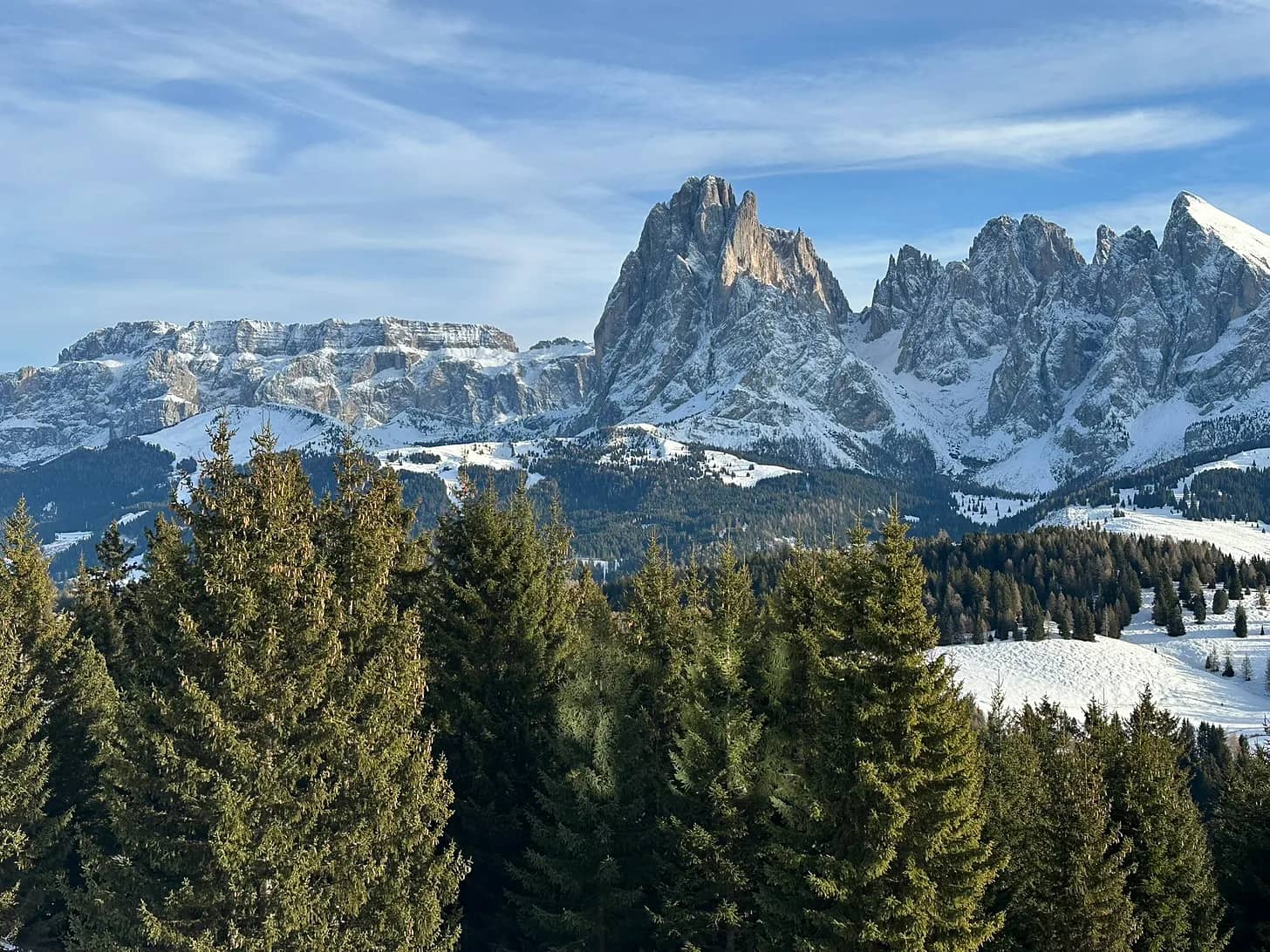
When Guides Are Not Enough (and Why I Had to Return to the Dolomites)

There is a particular kind of frustration you only recognize when you travel with the ambition of truly understanding a place: arriving at a long-dreamed destination, confident after years of experience, and realizing that your system no longer works.

After entire summers of trekking in Patagonia, I had developed a solid, reliable method. Map studied, refuge selected, parking spots or buses identified, return time agreed upon, packed lunch and snacks ready. Without ever planning it, I had become a trekker. When I finally had the chance to experience the Dolomites, I knew it wouldn’t be so easy to apply the same framework. And yet, the iconic jagged peaks made one thing immediately clear: every mountain range has its own language — and I didn’t speak this one yet.

So how did I try to plan the trip? First, I turned to friends who were already regulars in the region. They advised me on where, among the countless villages, it made sense to base myself, and which mountain huts were worth visiting.

Then I bought a digital guide — which soon became two — both promising to give me everything I needed. I found beautiful photographs, hotel suggestions (I chose mine from there, an excellent recommendation), lists of villages, and a suggested seven-day circuit through the area. Despite actively searching for information, I left without really knowing what I would be walking — but with confidence.

When I finally arrived in Castelrotto, I was surprised. I expected to choose a trail, walk all day, and return exhausted. Instead, I encountered an entirely different system:

  • Villages at every altitude
  • Accommodation within the plateaus
  • Mountain huts accessible by car or cable car
  • Trattoria-style food in the middle of the mountains — a very welcome discovery

What no one had explained to me was this: the Dolomites are not a mountain chain in the classical sense, nor do they resemble the rest of the Alps. They are a constellation of isolated massifs, made of dolomitic rock, surrounded by an intricate network of valleys — many of them crossed by roads and connected through mountain passes.

In practice, the plateaus are vast green high-altitude valleys, traced by mostly flat paths, dotted with beautiful hotels and meadows inhabited by cows, sheep, and horses. A concrete example: Compatsch (1,844 m), the gateway to Alpe di Siusi. You arrive by car or cable car. From there, you can start walking… or take a carriage ride, or cycle. A nearly democratic form of access to altitude, offering extraordinary views without extreme physical effort — sometimes even from your hotel pool.

The trip was unforgettable. And yet, something didn’t quite add up. Autumn fog concealed the sharp peaks, and I still didn’t fully understand the system. The green, reflective lakes were a pleasure, but something was missing.

Of course, I went back. This time during Christmas week, a classic Italian settimana bianca. I decided to focus on a smaller yet central area: Val Gardena. At a cable car station, I stopped in front of a topographic map mounted on the wall. I mentally traced each peak: Sassolungo, Sella, Langkofel. Then I stepped outside and searched for those same silhouettes from the viewpoint. Could I see them from here? Where did the trail go? In which direction was Bolzano? Perhaps a bit obsessive for my companion — but I made sure the information settled.

This process — observing, returning, building a system — is exactly what I do professionally. In Italy, Argentina, Patagonia, Mexico. I don’t assemble lists of must-see places and arrange them into days. I design a mental map to read a territory the way I read it myself. So that when you’re standing in Compatsch, looking at Sassolungo, you understand why that plateau exists, how it connects to the surrounding area, and what it reveals about Dolomitic geology.

There is something deeply counterintuitive about this. We live in a world where Google Maps tells us exactly how to get anywhere. Digital guides promise “everything you need.” YouTube offers step-by-step experiences so you can “live it” before you arrive. In that context, returning to a place simply to understand it better seems inefficient. But efficiency alone does not build understanding.

“Top ten” lists overwhelm us, hidden gems hide nothing anymore, and every corner of the planet has its guide. We are saturated with information, yet thirsty for comprehension.

Geographic logic, cultural rhythms, why one village sits higher than another — these details reveal themselves only with time, patience, and the humility to admit that the first time, you didn’t understand much at all. Knowing where to go is not the same as understanding what you are seeing.

The Dolomites reminded me of this once again: every place has its own geographic, cultural, and linguistic system. Understanding its differences — and the reasons behind them — is part of my obsession.

Not every trip requires this level of depth. But the ones that matter do. If you are planning your honeymoon, that once-in-a-lifetime fortieth birthday, or the single month of the year when you truly disconnect — this is that kind of journey.

Sole

PS: If you’d like to explore the area further, this carousel highlights the most iconic peaks, valleys, and villages of Val Gardena, one of the Ladin valleys of the Dolomites. And if you’re planning a trip, you can book a 30-minute conversation here. We’ll talk about your destination, your dates, and whether it makes sense to design it together.

Palmas de playa de México
A letter to the Riviera Maya I met in 2010

Corals that are gone, sargassum that persists, and why I keep designing journeys

I travelled with my father to the Riviera Maya in 2010 to complete our diving certification. We immersed ourselves in what was known as the second largest barrier reef in the world. Four unforgettable dives: we swam alongside giant turtles, crossed natural tunnels formed by coral, and, while parasailing, saw from the air the immensity of the Mexican Caribbean, with its turquoise, cobalt blue and emerald green stripes.

During four days of training, I paid 400 dollars to learn how to breathe underwater in front of such wonder. The phrase —“second largest barrier reef in the world”— I had found the night before on Wikipedia, thrilled to have such a treasure just nine hours from Buenos Aires. It felt like a privilege to see it, to have it here in the Americas.

Tour operators preferred other adjectives: “crystalline waters”, “unique biodiversity”, “unforgettable experience”.

I learned that nitrogen can kill you if you ascend too quickly, that moray eels may mistake your finger for a fish, that you should never touch coral. Nobody mentioned that the coral we were told not to touch was already dying. Silence was part of the product. We had paid for a dream, not for an ecology lesson.

Cozumel, with its famous coral walls, remained pending. But even then we knew the reefs were in danger.

The return and the invisible brigades

I went back in 2017, this time to Tulum, though I didn’t dive. Armed with Google Maps and determined to avoid crowds, I found a beach labelled by algorithms as a “hidden gem.” At six in the morning, waiting for the sunrise, I discovered another scene: cleaning brigades.

Four men with rakes and a pickup truck collected mountains of algae before the first tourists arrived. They worked silently, efficiently, invisibly. When I asked, one said: “It’s temporary, miss. Just currents.” But his eyes said otherwise. It was 2017 and sargassum had been arriving for six years. How long does “temporary” last when no one dares to name it?

Living in Mexico, I learned that sargassum was no longer a seasonal inconvenience but a crisis shaping every conversation about Caribbean tourism. The question was no longer if it would come, but how to hide it.

The new Caribbean vocabulary

I learned a coded language of the industry:

  • “Variable natural conditions” (there is sargassum).
  • “Authentic Caribbean experience” (you’ll see the reality outside postcards).
  • “Coastal renewal season” (do not come these months).
  • And the most perverse: “Opportunity to discover other attractions.” As if ecological collapse were an invitation to buy more tours.

What caught my attention: the conversation always focused on economic impact. Almost never on environmental effects. And rarely on the reef itself.

The sargassum belt

Since 2011, beaches once ranked among the cleanest in the world have received tons of floating algae called sargassum. What first seemed like an anomaly became an annual pattern, with increasingly severe consequences.

Sargassum —Sargassum natans and Sargassum fluitans— has always existed, drifting in the North Atlantic as part of a healthy ecosystem. The problem is scale: excess nutrients from the Amazon and Orinoco, global warming, altered currents. All combined to form the Great Atlantic Sargassum Belt, a strip of more than 8,000 kilometres of algae —the size of 800 Buenos Aires— that drifts every year from Africa to the Caribbean.

It doesn’t just ruin postcards. It blocks sunlight corals need, releases toxic gases as it decomposes, alters water pH, and fosters bacteria competing with reefs. All this while the Mesoamerican Barrier Reef already suffers bleaching, acidification, and pollution.

In Martinique, a school was forced to close because of the gases. In Barbados, hotel occupancy fell 40% as sargassum was removed by truckloads. In the Lesser Antilles, fishermen fought with tangled nets. Yet on Instagram, the Caribbean still looked unchanged.

The questions that change

In 2010 I asked: Where’s the best visibility? At what depth are the turtles? Is the water warm?

Now I ask: Why is the water hotter each year? What stories are left untold? For whom does this paradise exist? Does my presence speed its decline?

Sometimes I think my diving certification was also a historical document: Certified Open Water Diver, Riviera Maya, 2010. Translation: authorised to explore a world that once existed.

Travelling to remember

Sargassum is not just an aesthetic nuisance. It is a messenger insisting on speaking while we perfect the art of not listening. Like climate change, it feels enormous, complex, ungraspable. But one thing is within our reach: stop looking away. Name what is happening. Remember. Because sometimes, remembering coral is also a way of trying to save it.

While the Caribbean learned to hide its wound, I sought another sea. On the Pacific, the Sea of Cortez revealed biodiversity the Caribbean had already lost. In La Paz —not in Cabo’s all-inclusive resorts— I swam with sea lions, watched manta rays leap, realised that balance is still possible in some places.

It is not that resort tourism is the only cause of collapse. But when a place becomes a stage for unreflective consumption —drinks, parties, selfies— it loses its ability to teach, to transform. And without transformation, why travel?

Journeys with memory

At HeySole! I design journeys for those who, like me, seek more than crystalline waters. For those who understand that travel is also about bearing witness, asking questions, creating conscious memories.

Because knowing a place is not only about where to eat the best ceviche or find the quietest beach. It is about understanding its silences, its transformations, its beauty and its wounds.

If this text made you think differently about how we travel, share it. Because remembering a coral is also a way of caring for it.

El Puerto que nació viejo: cuando Buenos Aires eligió prestigio sobre función
The Port That Was Born Old: When Buenos Aires Chose Prestige Over Function

A story of urban decisions, necessary failures, and the courage to reinvent

Did you know Buenos Aires chose to build a port that wouldn’t work just to look like Europe? This is the story of Puerto Madero: when prestige beat pragmatism… and how that “failure” became Latin America’s boldest urban transformation.
In 1882, two projects disputed not just the port of Buenos Aires, but the idea the city had of itself. Luis Huergo—engineer, pragmatic—proposed straight piers following the river’s geography: functional, economical, designed for a port-city growing from work. Eduardo Madero—nephew of Vice President Francisco Madero, well-connected—imagined closed docks Liverpool-style: symmetrical, ornamental, worthy of a capital that always looked to Europe before understanding itself.

The battle between creole pragmatism and imported prestige was won by Madero. Between 1887 and 1898, English architects John Hawkshaw and Harrington Hayter designed from London a port that Thomas Walker & Co. built with red brick docks that looked like industrial cathedrals transplanted from England. Armstrong Whitworth cranes presided over a beautiful but dysfunctional port: it was scenography before infrastructure.

By 1911 they were already building Puerto Nuevo following—irony of fate—Huergo’s ideas. In 1925, the last ships abandoned Madero’s docks. The port born to impress remained an urban relic: over 60 years of abandonment, with monumental warehouses taken over by entire colonies of rats, in the heart of a city that preferred not to look toward the river.

The Archaeology of Abandonment

My grandmother saw it from her ANMAT office: that landscape of abandonment Buenos Aires had naturalized. Brick warehouses bitten by humidity, metal structures rusting in the open, weeds growing between railway tracks. It was the exact reverse of the dreamed port: the place where the city stored its most visible failure.

For over half a century, Puerto Madero was the porteño urban unconscious. There lay the consequences of choosing appearance over function, prestige over pragmatism. The 1882 decision had become ruins, and the ruins had become normality.

But cities, like people, sometimes need to hit bottom to reinvent themselves.

The Laboratory of Reinvention

In 1991, when the Antiguo Puerto Madero Corporation—an unprecedented mixed management model in Argentina—decided it was time to transform that urban edge, it wasn’t just about recovering buildings. It was redefining what city we wanted to be. Again, geography as politics; urbanism as self-portrait.

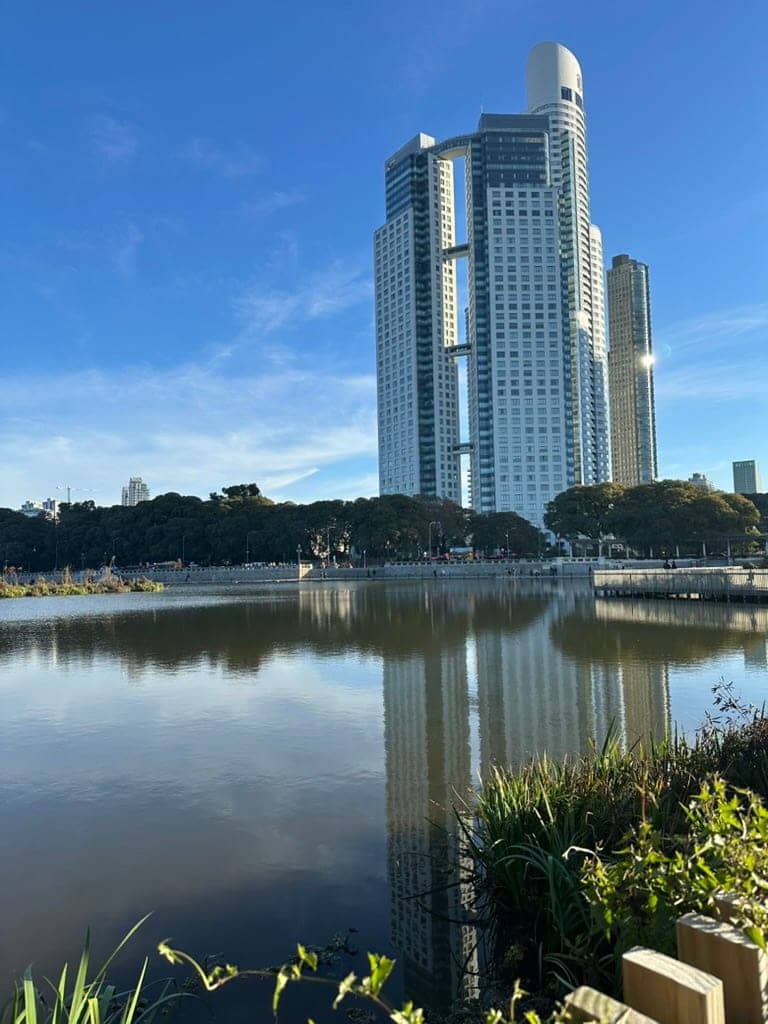
My father moved near Puerto Madero in the late ‘90s, when cranes still drew the skyline and every walk was archaeology of the future. We went to watch the El Faro towers grow, to walk the Puente de la Mujer as if we were the first to step on it, to witness how the old Molinos silos became lofts with the Armstrong Whitworth cranes still present as silent witnesses of this place’s two eras: industrial and residential.

El Puerto que nació viejo: cuando Buenos Aires eligió prestigio sobre función

The parks with straight lines and millimetric grass were our laboratory of modernity: a Buenos Aires without broken sidewalks or improvised corners. But also something more: planned green spaces where there was only abandonment, pedestrian walks connecting the city with the river, cultural infrastructure democratizing access to contemporary art.

Because Puerto Madero isn’t just corporate towers and restaurants over the dock—though that’s the most sold postcard. It’s also the Fortabat Museum with first-class Argentine art, the Ecological Reserve that self-regenerated over rubble, the running paths where anyone can train for free, the Nereidas Fountain that migrated from Plaza de Mayo to find its definitive place facing the river, the historic frigate Sarmiento telling Argentine naval history.

Beyond the Tourist Postcard

Later I moved nearby and Puerto Madero became my morning running track, my green refuge in a city breathing concrete, my direct connection to the river without traffic light mediation. There I understood this neighborhood has multiple layers of use, not all visible in tourist guides.

At 7 AM, while waiters dressed as gauchos still sleep, Puerto Madero belongs to runners, dog walkers, retirees doing tai chi facing the river. At 8, it fills with office workers walking toward their mirrored corporate buildings. At 6 PM, it’s territory for families seeking free space for kids to ride bikes. On weekends, it transforms into a rest destination: picnics, bike rides, and mate.

Is it gentrification? Yes, also. But it’s more complex than that.

The Politics of Urban Transformation

Here’s the tension that defines Puerto Madero and, really, defines every successful urban transformation: can a space be simultaneously exclusive and inclusive? Can state planning coexist with private investment without one canceling the other?

For many porteños, Puerto Madero remains empty ostentation, a non-place that doesn’t belong to them, a real estate experiment disguised as a neighborhood. And they’re partially right: it’s expensive to live there, many restaurants target tourism, the aesthetics sometimes seem forced.

But it’s also true that where there was wasteland now there are 28 hectares of public green spaces within the Puerto Madero project. That Costanera Sur, which went from elegant beach resort in the ’20s to marginalized zone in the ‘70s, today is part of the largest green space complex in downtown Buenos Aires along with the 350-hectare Ecological Reserve. That Argentine art has an exhibition space (the Fortabat Museum) that didn’t exist before. That thousands of people can access the river in a city that historically turned its back on water.

One of the new walkways in the Ecological Reserve.

Puerto Madero’s true lesson isn’t that urban transformation is good or bad per se. It’s that cities, like living organisms, need to evolve or die. And that sometimes, paradoxically, the most resounding failure can become the most valuable opportunity.

Buenos Aires chose wrong in 1882. It built an English port on River Plate geography, prioritized image over function, bet on imported prestige over local innovation. The result was predictable: a port that didn’t work, obsolete before turning 40.

But that error became, a century later, the raw material for one of Latin America’s boldest urban transformations. Abandoned Victorian warehouses became lofts and cultural centers. Dysfunctional docks transformed into water mirrors multiplying the sky. Rusty rails became green paths.

The Geography of the Present

I insist Puerto Madero is to be lived: to breathe air coming from water, to see art between historic docks, to understand that sometimes a city needs to invent spaces where none existed. It’s not nostalgia or pure speculation: it’s geography of the present, a piece of Buenos Aires that dared not resemble any other.

Is it perfect? No. Is it inclusive? Not completely. Did it solve all Buenos Aires’ urban problems? Of course not.

But it did achieve something that seemed impossible: returning the river to a city that had forgotten it was a port. And that, in a metropolis of 15 million inhabitants, is no small thing.

Next time you walk through Puerto Madero—whether to run, see an exhibition, or yes, even eat at one of those restaurants overlooking the dock—remember you’re stepping on the materialization of a question all cities ask themselves: who are we and who do we want to be?

Buenos Aires took 109 years to answer it. But when it did, it built not just a new neighborhood, but a new way of thinking about itself.

And tell me: Do you have your own Puerto Madero experience? Or some place in your city that completely changed and generates mixed feelings? I love reading these stories in the comments.

If this story resonated with you, sha