
Essays on places, books and culture. Coordinates change the way we think: the history behind a neighborhood, the politics behind a landscape, the emotion behind a ritual.
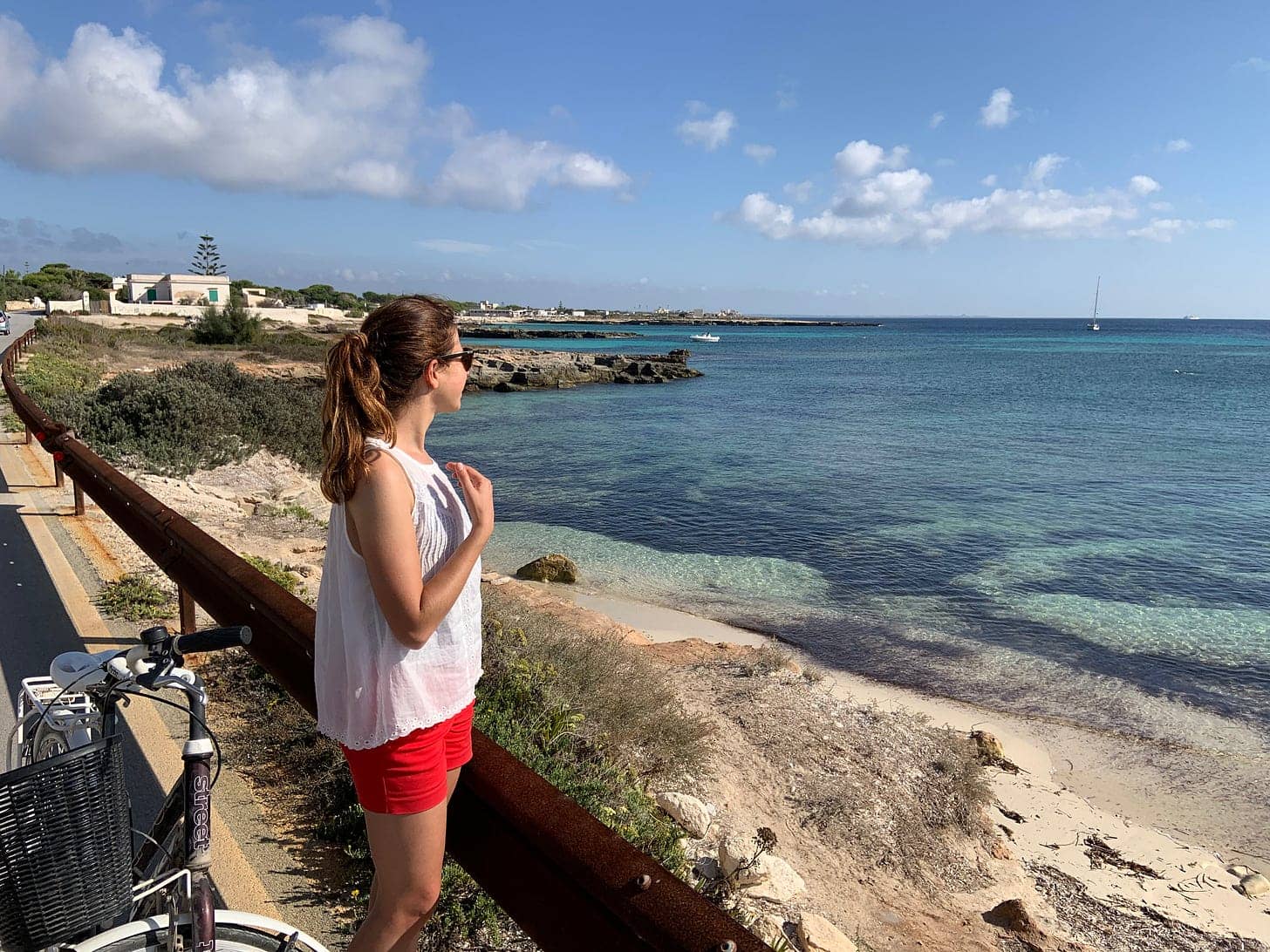
What does Favignana do after the wave of the magic wand?
Nolan’s Odyssey: what a shoot leaves behind, what a film promises, and who gets shut out by protection.
Cycling through a kind of white and ochre rocky desert, swimsuit still a little damp, a hat against the sun, and itching for a dip in the next cove. Lunch on cold caponata watching the waves, finished off with a caffè al pistacchio. Running the climb up the hill as a morning workout, and catching my breath with the wind blowing through what used to be a window of the Castle of Santa Caterina. That’s what my days on Favignana, the island off Trapani, were like a few years ago. That view, which I thought was mine, now belongs to Ulysses, and to movie theaters all over the world.
Some destinations work for years to get picked by a film: they set up film commissions, offer incentives, travel to international fairs to show off their locations. Favignana, as they tell it on the island, just got lucky. The largest of the Egadi Islands, half an hour away by ferry, is the Ithaca of Christopher Nolan’s The Odyssey. Ithaca exists, of course, and it’s in Greece, but anyone who wants to stand in the film’s Ithaca has to go to Sicily.
The prize for having been a film set is the famous economic spillover. But a production is not a development program. What happens next is up to the island.
The production spent a few months on the island, between late 2024 and spring 2025, to complete some seven weeks of shooting. It employed around 500 people, between extras and trades, and the mayor estimates between 1 and 2 million euros in local spending over those months. For using the old tonnara as base camp, he says, the town collected 130,000 euros. They built a cable car to haul equipment up to the castle and then took it down; the road the production asked for was never authorized.
What’s being announced is on another scale. 250 million euros in tourism over the next three years, or five, depending on who’s talking, and nobody signs off on it. At the town hall they say investors have come from North America, the Middle East and India, that an old holiday village is aiming for five stars, and that the Palazzotto Florio opens as a boutique hotel in June 2027. They’re celebrating, and they have reason to.
But Favignana is an island of coves. Cuts in the rock where you go straight into the water, jumping heroically off ledges or picking your way in water shoes over beds of stones. The most famous ones, like Cala Rossa, were quarries where for centuries, by hand and in blocks, they cut the stone that built the island and part of Trapani. At eleven in the morning, a cove is shared by the 3,000 residents, the people staying over, and those who got off the ferry that morning. On a summer day there are already between 40,000 and 50,000 people on the island.
Those who come, they say on the island, are mostly Italian, and half of them Sicilian. For someone from Trapani it’s their beach, half an hour away, and for many it’s the holiday they’ve always taken. For years, lodging was a matter of owners fixing up their homes as bed & breakfasts. Now businesspeople are arriving to take over the big properties.
The Italian press is alarmed by the White Lotus effect: groups marching on a pilgrimage to the photo spot, high prices, and the island turned into another Taormina. When that happens, the authorities look for protection, and there are two recipes: curb day trips and restrict short-term rentals. The town is already looking at Capri, which this summer capped groups at 40 people. But on Favignana the day visitor doesn’t always come in a group: it’s also the Sicilian crossing over from Trapani. And the short-term rentals belong to the people who own the houses. Off-the-shelf fixes rarely work. The island already has a rule of its own: in summer, if you’re staying fewer than six days, your car doesn’t come in. It stops the car, not the neighbor.
We can ask Sicilians how they picture their island after those five years of development and tourism. I’ll venture to describe the island I’d like to come back to. The sea is still for swimming. Local guides tell me the story of the castle and the tonnara, and take me to try cannoli filled on the spot, the way it should be. And while I read on a rock in the shade, I hear Sicilians shouting at each other before jumping in. A massage at the hotel spa in the afternoon, and then an aperitivo at the bar in town. Can an island grow, and protect itself, without pushing out the people who make it worth it?
White Lotus sold a life: the hotel, the breakfast, beautiful people ruining their vacations. That can be booked. Nolan sells a view. And Favignana’s view is at the end of a shadeless climb, or at the bottom of a jump off the rock. No van gets you there.
Maybe that’s enough. Maybe the stone will set the limit on its own, the hotels will come, and the guy from Trapani will keep crossing over on Saturdays. Maybe not, and Sicily will lose one of its detours. We don’t know. Not the mayor, not the investors, not the people who live there, not me.
Ulysses took ten years to get back to Ithaca. We’ll see what this one looks like a lot sooner.
Originally published in Sole Plazas on 8 October 2026.
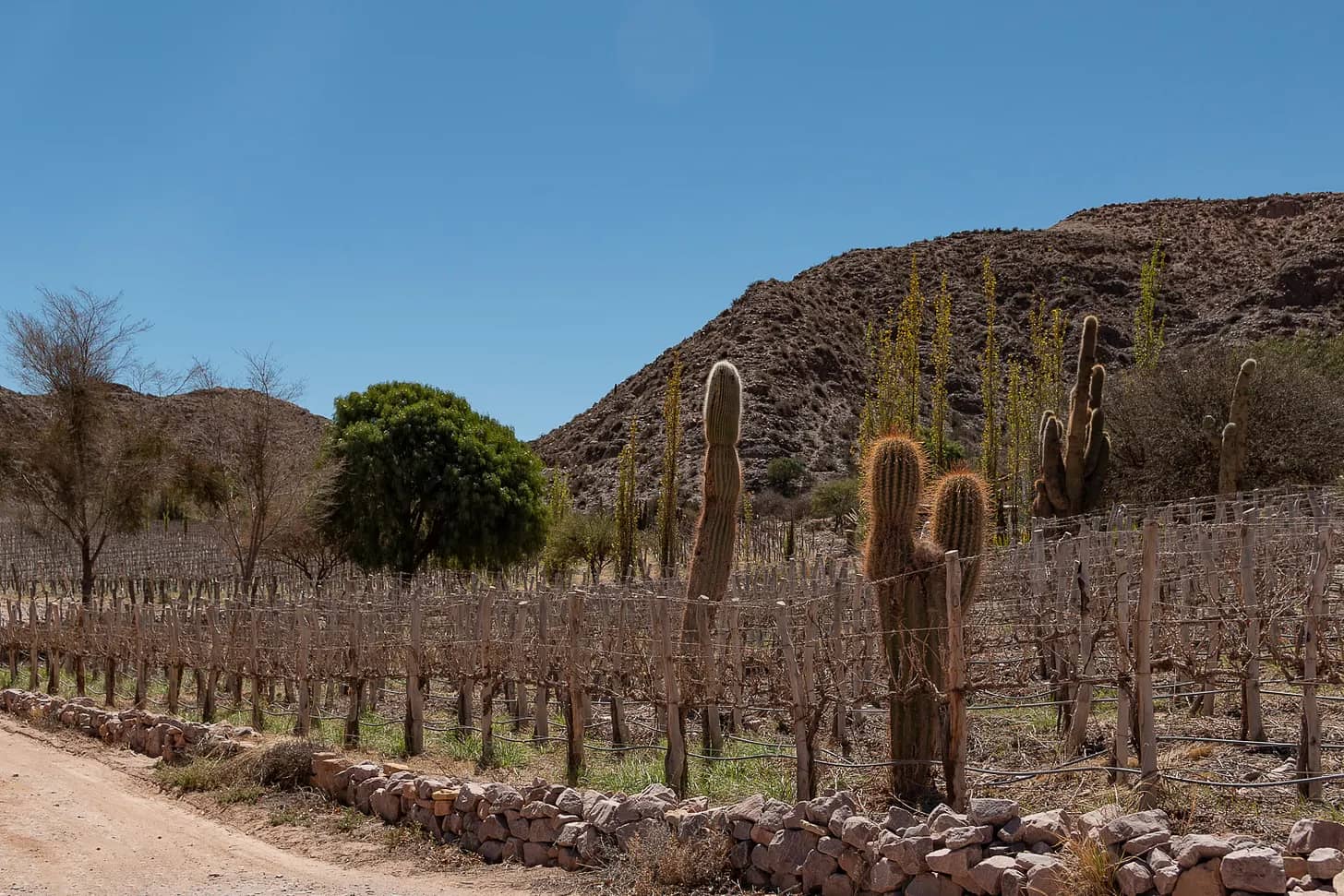
A tale of two Augusts
In northern Argentina, August is celebrated by feeding the earth. In Italy, by closing the office.
In five days I received two messages.
The first came from the road that links Salta and Jujuy. A friend riding shotgun, telling me she was taking the day off to celebrate the first of August, as one should. I confess I had to google it.
The second arrived in writing, from a design studio in Alba, Piemonte. They were happy: the holidays are coming. Ferragosto is near.
In northern Argentina, as in other Andean regions, this is the dry season, so on the first of August a hole is dug in some corner of the garden, the balcony, the mountain, and the family offers the earth what it likes best: empanadas, wine, coca leaves, a fizzy drink. The earth is fed. Thanks are given, prosperity and fertility are asked for, and the empanadas and wine pass on to the guests. The siku, played in pairs because each musician holds half the notes, the chacareras, rock or cumbia sound in the background, and it all turns into a party.
In Italy, around these dates, the opposite happens. The 15th of August has been celebrated since Roman times. The tradition comes from the Feriae Augusti, the rest after the labours of the field decreed by the emperor, which later absorbed a Christian tradition, the Assumption of the Virgin. Over there it’s hot and everything is closed. If you’re in the city, you’re probably a foreigner. It’s not the earth that eats and drinks, but the Italians. Saying Buon Ferragosto is a way of closing the office, greeting the family and taking the train to leave the concrete behind.
Something else is done in Argentina at this time of year, in the Litoral mostly, though it has spread a little to the rest of the country: drinking caña con ruda. Last Sunday was the first Vino de Viaje gathering, where we drank not caña but wine. One of the wines was from Jujuy, from the Quebrada de Humahuaca, a desert around the Río Grande. It’s hard to imagine vineyards there, among hills of seven and fourteen colours and cardón cacti several metres tall. But thirst suits the vine: less water, smaller bunches, each grape more concentrated. And the high-altitude radiation thickens its skin.
In Piemonte, between the Ligurian Sea and the Alps, the August heat has an expiry date: by October you can’t see the vineyard next door. That’s where Nebbiolo is harvested, a grape named after the fog and pale all the same: little colour, plenty of tannin.
The desert where you can see everything gives an opaque wine. The fog where you can see nothing gives a transparent one.
Besides the wine, I told them how to travel to each bottle: where the Dupont estate sits in Maimará, what you cross on the road, where to stop. And we talked about the pasacana, the cardón’s fruit, with those white hairs. I didn’t tell the legend: a cacique’s daughter who fled with a forbidden love, and Pachamama, who sheltered them by turning them into what they are now. She stayed there, embracing him, under the green poncho.
My friend has already toasted the earth and is driving back along that road. In Alba they’re closing the studio. The cardones are still there, standing in the desert.
Originally published in The Detour on 10 August 2026.
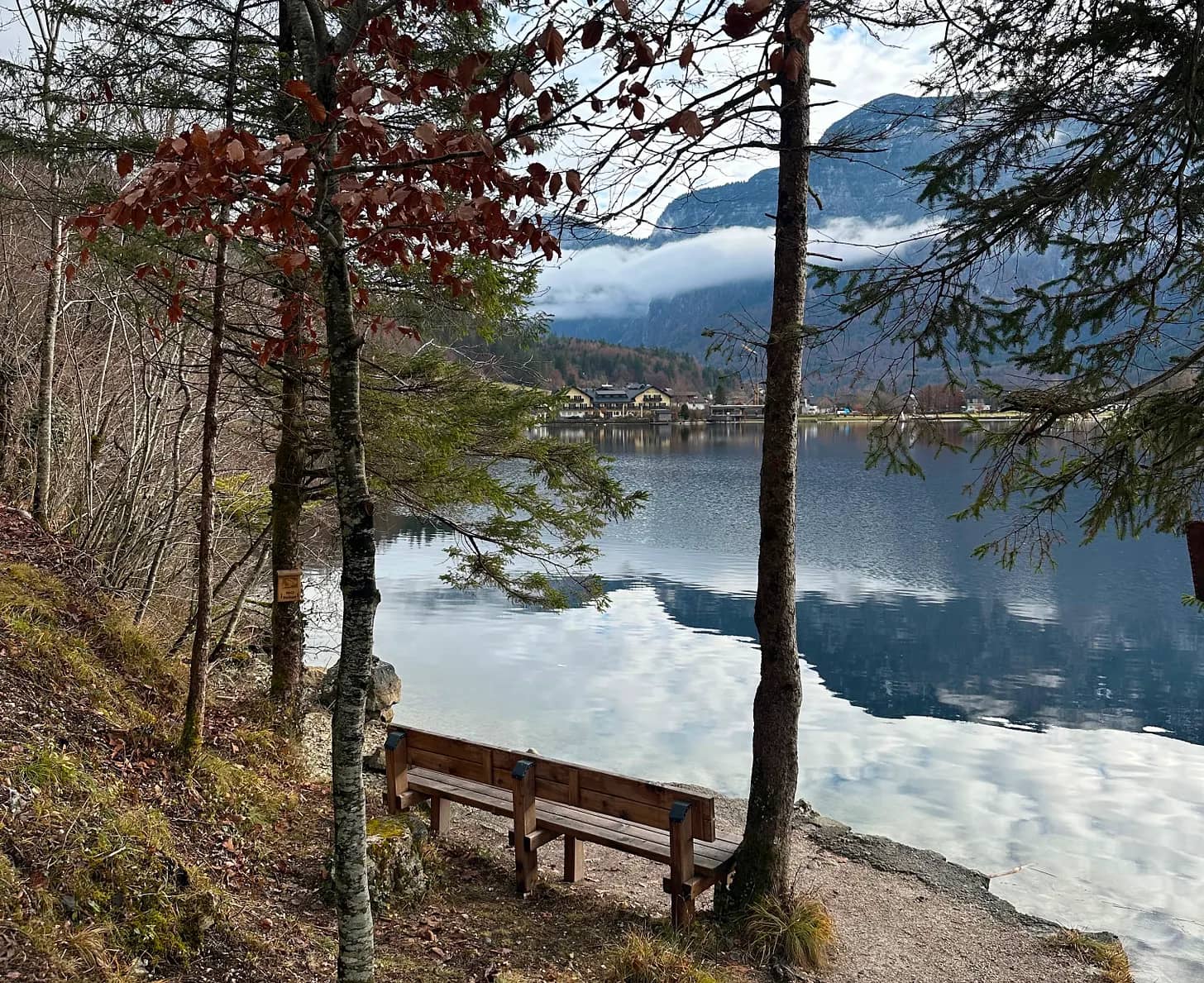
I had no cash, so I ended up in the wrong village
A cash-only ferry, an accidental detour, and a full-scale replica 8,000 kilometres away.
When I told my mother I was going to the Alps, she said not to miss Hallstatt. It was the place she had loved most on her trip fifteen years earlier. She warned me it wasn’t easy to get to, that she had gone with a tour. Stubborn as I am, I decided not to.
With the help of Google and AI, I optimised the perfect route from Salzburg. Hallstatt sits across a lake from its own train station, and you can reach it by road, driving straight in, or by a combination of transport. I chose the complicated one: a scenic bus skirting the great Wolfgangsee, a few stops on a local train and, finally, a short boat ride that crosses the Hallstätter See in a perfect straight line to arrive at the prettiest village in Austria, perhaps in all the Alps.
But the optimisation failed. As the crowd came off the train and began to pile up on the pier, I overheard, in someone else’s conversation, what was about to become my problem: only cash. And of course, I had none. With very little hope I waited for the boat to dock and asked about possible exceptions. The answer was a dry, simple no. I was stranded on the wrong side of the lake.
I looked along the left shore and spotted a path; according to the map, the next village was an hour away on foot. The alternative was to wait for another train, which would take just as long, or to turn back. It looked like a pleasant walk in the sun, so I set off along what seemed to be a bicycle path, rising and falling for a few kilometres beside the water.
When I reached Obertraun I found a village that was picturesque, but a ghost. From where the village began, with its little alpine houses and small uninhabited hotels, I walked another twenty minutes, starting to doubt a strategy that had brought me, on foot, to nowhere.
A few metres past the chapel stood the famous ATM. At the bus stop, a tidy timetable announced the next service in an hour. After a short, warm exchange with the woman at the tourism office, centred on the activities winter would soon bring with the snow, I went back out to wander until it was time. The absolute silence was broken by a bus returning children from school. While they got off and scattered, running to their houses, mine arrived.
Minutes later I was sitting with my nose against the glass to follow, up close, the route that climbed to the Krippenstein ski centre, on the Dachstein massif, and brought me, finally, to Hallstatt.
The first impression didn’t come from the village but from the number of people with suitcases, large and very large, moving in every direction. For me this was a day trip; it took me a while to understand what was happening. Since the detour had cost me more time than planned, I concentrated on getting lunch, though without much success: places were closed, or open but with no interest in having me. I managed, in the end, a soup opposite the Protestant church.
I walked the village end to end in far less time than the sunny path had taken me. I read the angry signs at the viewpoints: you may take the postcard photo, but in silence and without showing enthusiasm.
Of course. Hallstatt had lived through a boom, especially after the postcard materialised into a village replicated brick by brick by a mining company in Boluo, in Guangdong province.
The village exists because of salt. Its mine, one of the oldest in the world, was run by the Habsburgs from Vienna: hence the name of the region, Salzkammergut, the salt chest of the crown. Today it is an attraction with a slide. It was closed for renovation, like the giant balcony they built for taking photos over the See.
Until the late nineteenth century, Hallstatt could only be reached across the lake or along mountain paths. Now two roads arrive, one along each shore.
With no viewpoints available and the sun already dropping, I made a point of covering every street, the ones that climbed and had no shops, the ones far from the panoramic spots. Even so, the village ran out quickly.
I took the bus back to Obertraun. I wasn’t going to give the boat people the satisfaction.
After waiting in the silence of the station, I boarded the empty train. At the next stop, Hallstatt’s, everyone got on.
Do you have a town next door? One you reached by accident and liked better than the famous one. Leave its name in the comments: I’m collecting them for a future piece.
Originally published in The Detour on 14 July 2026.
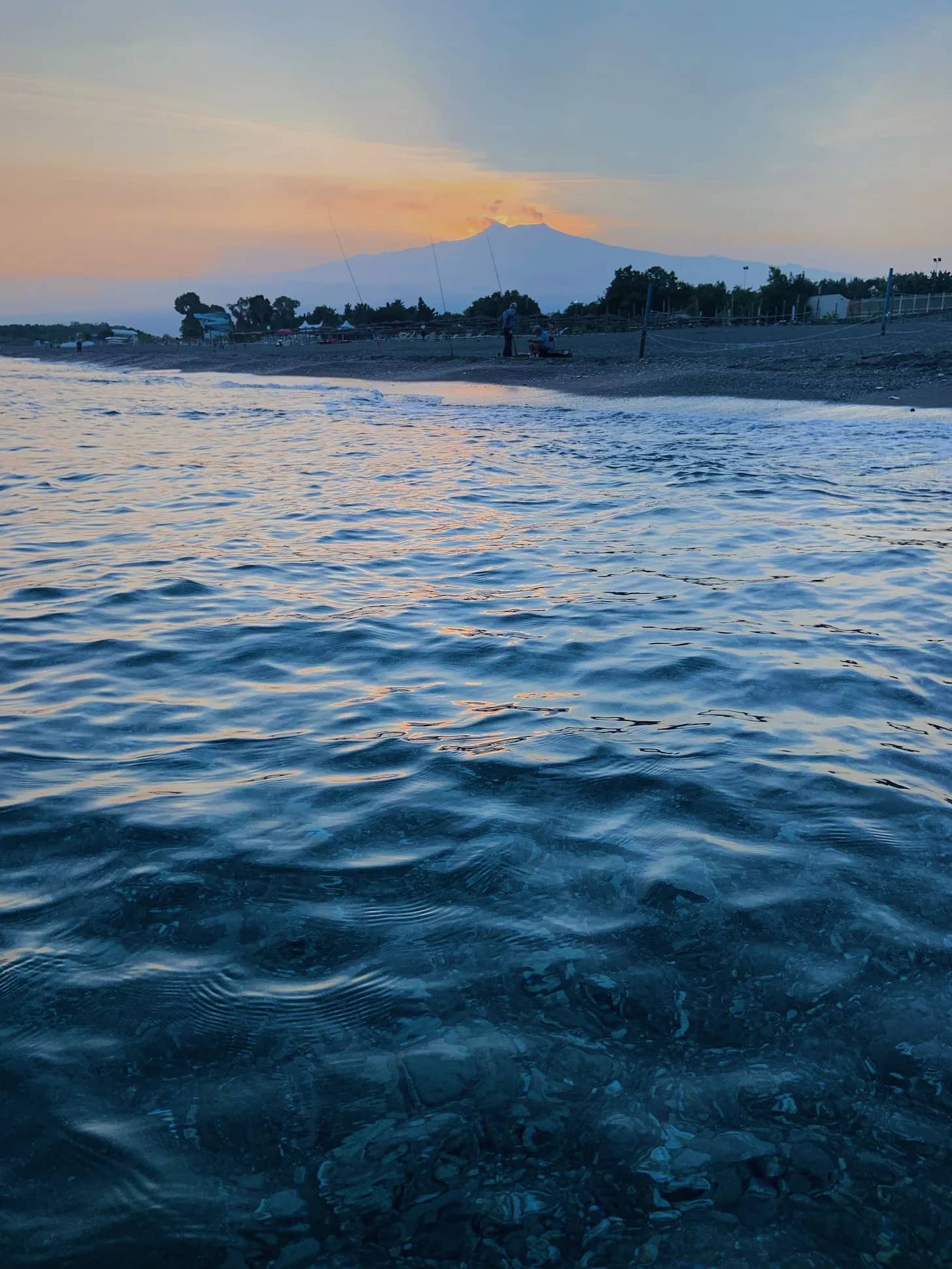
The postcard beach wasn’t my beach
Four Sicilian beaches, and the best one isn’t the famous one.
The most useful warnings before a trip don’t come from guidebooks — they come from people who make a living receiving travellers. I learnt this working with hosts at Airbnb. Before my first trip to Sicily, a mendocina with Sicilian roots warned me: “To travel through Sicily, plan your trip around the colour of the sea and the sand, depending on what you like.” These are four I tried.
Vendicari
When I do road trips, I like to look at the map for places to add as intermediate stops. That’s how Vendicari appeared, on the way down from Noto towards the coast. A nature reserve where there were once tonnare; today, occasional flamingos and travellers chasing the promise of Caribbean sand. To reach Calamosche you walk a slightly arid trail, watching birds along the way. I don’t know whether it was the heat, the sun, or the intensity of a Sicilian autumn that still feels like summer, but after walking forty minutes under the sun towards the famous turquoise, I liked it, but I didn’t find myself there.
Isola Bella
Taormina is one of Sicily’s jewels: its Greek theatre, its views that feel like a balcony over Etna, its elegant streets, and lately, the fame of White Lotus. Parking the car was a challenge I wouldn’t wish on anyone: streets with impossibly steep gradients, a tiny car park, and a crowd that overwhelms. It felt a little like stepping out of the Sicily I’d been living in. After wandering and walking up to the next village, I decided to visit Isola Bella. The cable car connecting the historic centre to the Mazzarò coast was closed — I think because of strong winds. Luckily, the heat at Calamosche had already trained me to walk in high temperatures, and going down is always easier than going up. The view is the beautiful postcard we all know. But I didn’t stay for the day: the shallow water, the jellyfish, the crowds. Obligatory photo, and I left. Not my cup of tea.
These days, the most photographed beach of a place and the best beach of a place are almost never the same.
Giardini Naxos
I rented the flat of the mendocina host, the same one from the warning, and let myself stay somewhere off the circuit, at the foot of Taormina. It isn’t a magazine destination. Walking towards the fishmonger waiting with i ricci, the signs spoke to me in Italian and in Cyrillic; the Russians discovered this stretch of coast decades ago, before fashion looked this way. I gained breakfasts and dinners listening to the waves. The beach is long, of black sand: the same sand you slide down running when you trek up Etna. Going out for a jog in the morning and slipping into the sea on the way back. A sea that drops off quickly, only a few steps before you can swim. Fish passing by, the water a deep blue — not the turquoise of postcards but something deeper, transparent all the same — and Etna erupting in the distance.
Etna erupts almost always, and watching it with its explosions while floating on a beach made of its own sand wasn’t a tourist curiosity, but learning what Sicilians have known for centuries: that you can live close.
Favignana
It isn’t quite Sicily. It’s an island apart, off the west coast, an hour by ferry from Trapani. And unlike the others, it isn’t a place to arrive at but to wander through: by bike or by golf cart, from one cove to another, jumping off the rocks into transparent water, going back the next day to the one you liked best. If you’ve travelled European beaches, you probably own a pair of water shoes; mine came from a stall at the port. A detour within the detour.
What would your beach be? The one at the end of the hot trail, the postcard one, the one by Etna, or the ones in Favignana by bike? It says more about you than about Sicily.
Originally published in The Detour on 27 May 2026.
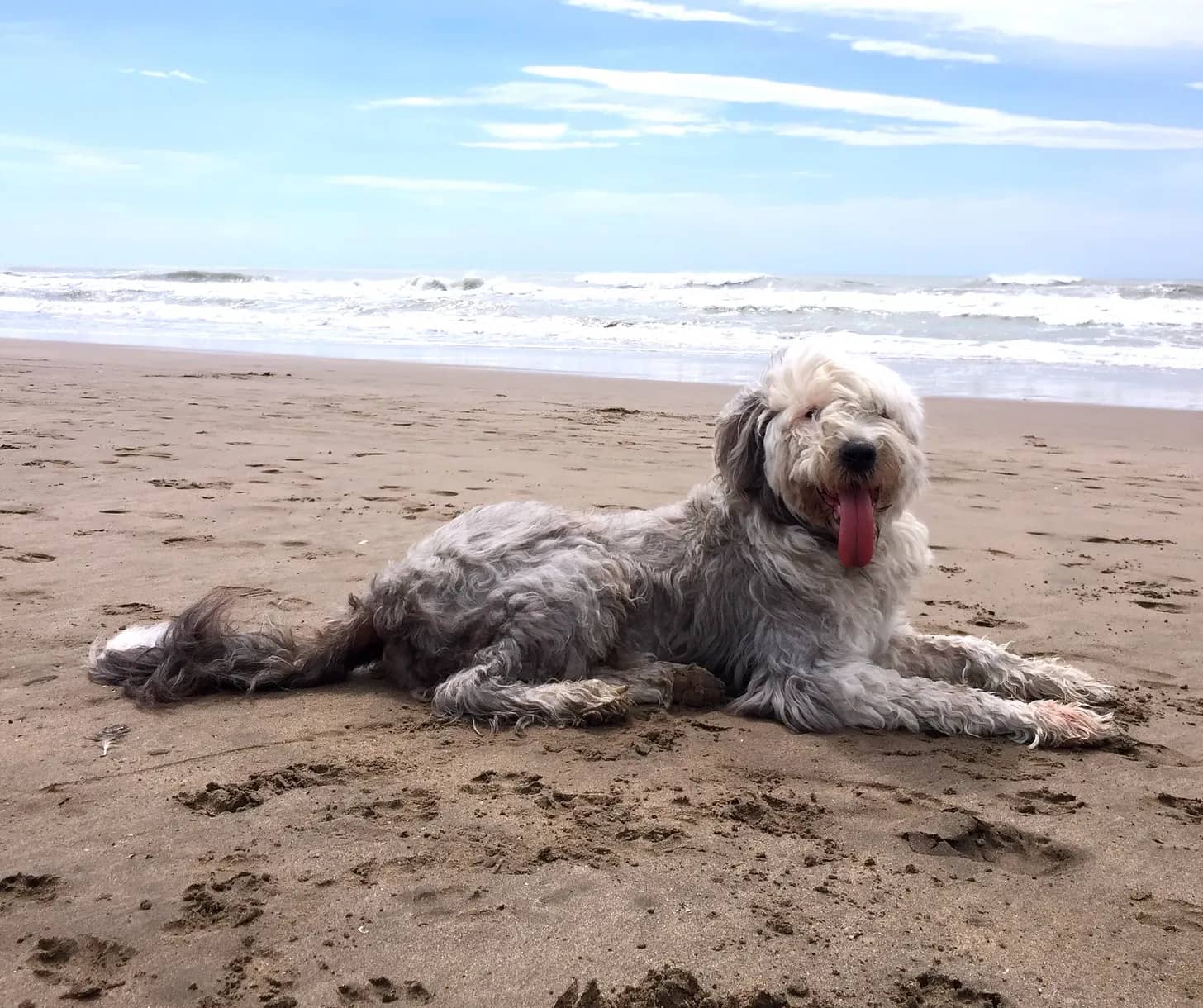
My Old English Sheepdog used to herd my grandmother
A Sheepdog in Buenos Aires, a St Bernard without snow, a Xolo guiding souls.
The story of Kempinski, that old English Sheepdog of mine, pushing my Granny Haydée away from the traffic on the pavements of Buenos Aires, still makes us laugh. We suspected the behaviour came from his herding instinct, triggered by her thick curls until he mistook her for a sheep. And that confusion would transport him to the Cotswolds, the Shropshire Hills, or the Seven Sisters — his natural territory, where he wasn’t only a perro de la familia.
Finding a dog in its original geography is moving: crossing paths with Bernese Mountain Dogs walking their humans on the very Bern Bridge became my sharpest memory of the city. Not far from there, at the Great St Bernard Pass (in French, Col du Grand-Saint-Bernard), which connects Switzerland with the Val d’Aosta, Augustinian monks have been rescuing travellers from their monastery along the alpine route since the Middle Ages. Their relationship with the famous dogs didn’t start with work: the neighbours of Vaud and Valais gave the monks the dogs as company during their time at altitude. It was only with time that they discovered their warmth and attention made them ideal to be trained as snow rescuers. The brandy barrel in the photos? Strictly ornamental. Like the St Bernards in Bariloche: posing for a photo in the centro cívico, with no snow and no rescues to attend to.
The ones who do still go about their work with diligence are the truffle hounds of Tuscany and Piedmont, who find — with their sharp snout — a prized white from Alba, or a black from Norcia. The very same we later grate with such delight over pasta. The work was discovered by pigs and wild boars: same fine sense of smell, but they don’t learn, or won’t learn, to let go of the trophy. When I followed a certified tartufaio on his hunt, I watched him cut a sliver of truffle so the dog could savour it and keep searching on the next walk through the woods.
If it’s about rolling country, maybe the next trip should be back to the Cotswolds — yes, where the sheep used to walk — to find again the curve of those curls, and that old faithful sheepdog of mine.
What dog marked a trip for you? Yours, someone else’s, found on a pavement in another country. Tell me in the comments.
Short Detour
Xoloitzcuintle. You may know him because he’s hairless, but his virtues run much further. He arrived in the Americas with the first humans, 15,000 years ago. The Mexican national dog isn’t a working breed — he’s mystical: he’s the one who accompanies you to the underworld. He was adopted by nearly all Mesoamerican civilizations — Maya, Aztec, Toltec, Zapotec — as the Sun’s guide through the afterlife each night, accompanying souls across the Apanohuaya, the river that divides this world from Mictlán. No dog, no crossing: which is why they were buried alongside their owners, and why effigies were built in their image to keep watch over them. More recently, he kept Frida Kahlo company in Coyoacán, who painted him as el Señor Xolotl across several of her works.
Before you go
Flush, by Virginia Woolf. The biography of a cocker spaniel, written in 1933. Begins in London, ends in Florence: Elizabeth Barrett Browning escaping her father, running off to Italy with Robert Browning and the dog. Narrated through his eyes.
Originally published in The Detour on 12 May 2026.
The recipes that walked
Before the plate, the flock. Before Rome, the road.
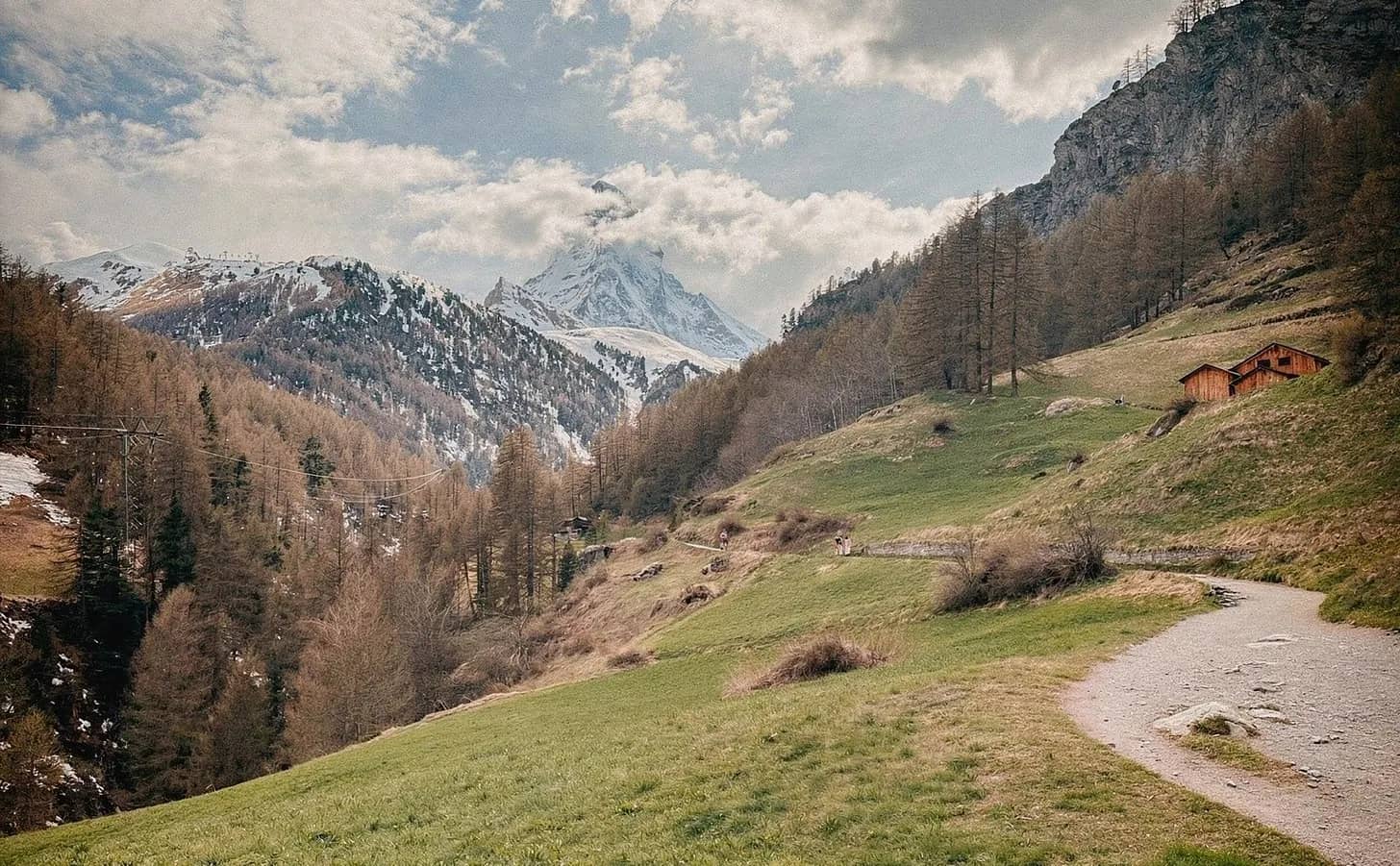
When you visit Zermatt, you will probably walk the forty minutes of uphill trail that separate it from Zmutt, its neighbour above. A village of ten wooden houses at 1,936 metres above sea level, with a chapel from 1719, where almost no one lives in winter. Three centuries ago, the climb was not a stroll, it was work. Every year, shepherd families would move from the valley up to higher ground to offer tenderer pastures to their sheep, and to make cheese in the meantime. That practice, transhumance, is not only Swiss. It is Mediterranean. Where shepherds walked the most, they cooked the most. And where they walked the most was in the Italian Apennines, along green highways called tratturi.
That walk wrote the menu. Cacio e pepe is the minimal version: dried pasta, pecorino carried in the saddlebag because hard cheese keeps, pepper as dry preservative. Amatriciana takes its name from Amatrice, a village on the Lazio-Abruzzo border, on a pastoral route. Gricia uses the same pantry as amatriciana, but without tomato, a late post-Columbian addition. Carbonara is a case apart: historians still debate whether it was born in the Apennines, in a postwar Roman kitchen, or in the crossing of the two.
Italians have a name for almost everything, and they have one for this too. Cucina povera. The cooking of the shepherd who ate with what he carried. Today those recipes steam on tables that never saw a sheep. The plate changed geography. The pantry, underneath, remains the same.
Short Detours
The centre of the Apennine pastoral routes is here, between Abruzzo and Molise, where the springs of the Massiccio della Majella and the Matese feed the dried pasta you keep in your pantry. De Cecco and Delverde use water from the Majella. La Molisana, water from the Matese. The same mountains the tratturi crossed. Fara San Martino has 1,300 inhabitants and four pasta factories. The difference is the water.

The sheep in the photo are Valais Blacknose, native to the Upper Valais near Zermatt, documented since the 15th century but only recognised as an official breed in 1962. They climb to the alpine pastures in summer, descend to the valley in winter: the transhumance we wrote about in past tense still happens, in the present, every year.
Before you go
I am consulting, as always, The Silver Spoon. The bible of Italian home cooking, published in Italian in 1950 and translated into English in 2005. I open it every time I cook antipasti, pasta, risotti… It has been in my kitchen for years, with the caponata page already worn from use.
Originally published in The Detour on 28 April 2026.
I wasn’t looking for the largest Pride in Italy
Bologna, the city where street life still makes sense.
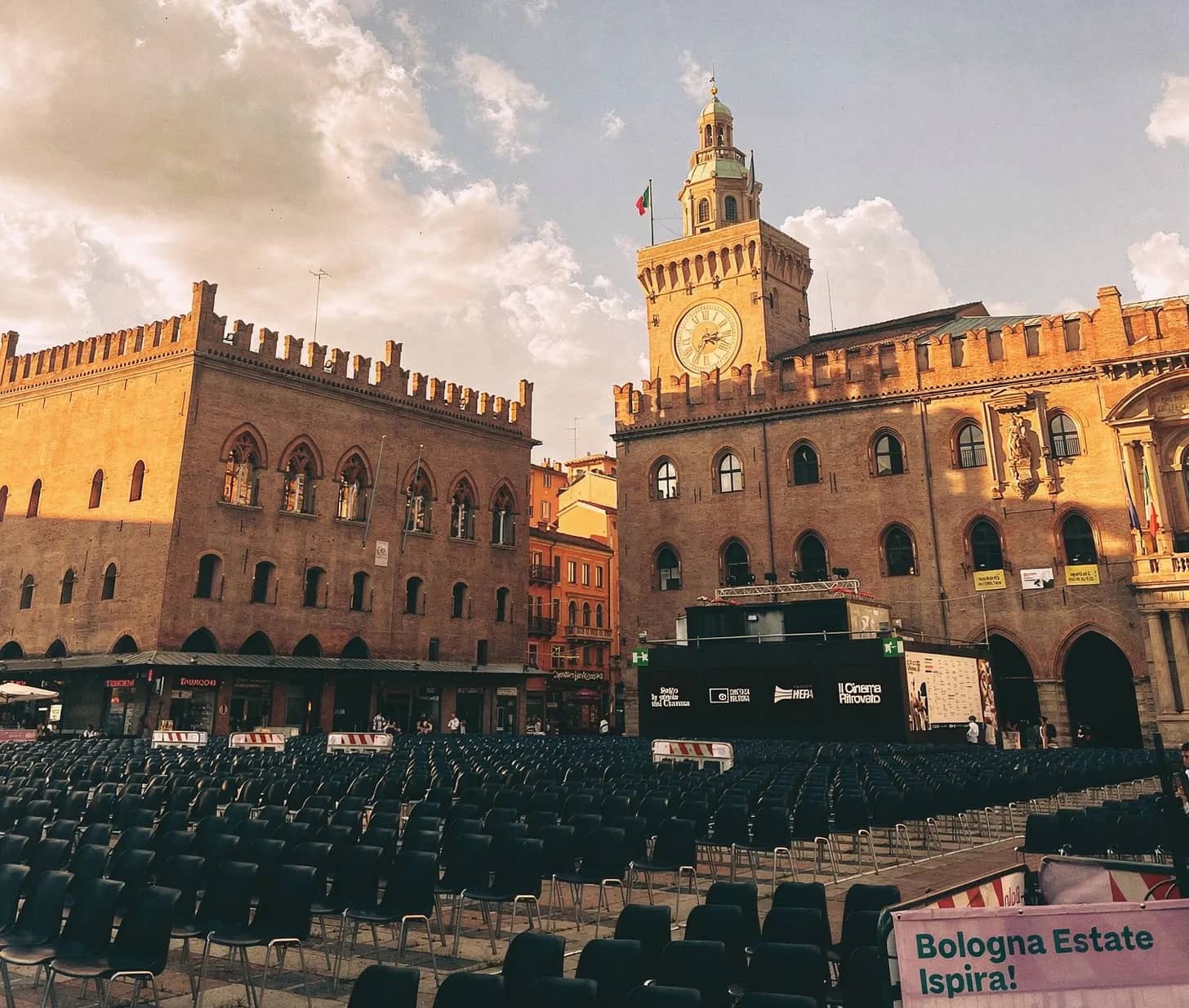
I stepped off the train after a day trip through Emilia-Romagna and walked straight into a street blocked by a parade. Glitter, floats, every colour imaginable, loud music between elegant facades. It was Italy’s largest Pride, and I hadn’t gone looking for it.
I ran into classmates and teachers from Italian school. We toasted in the park between food stalls, caught our breath after hours of dancing.
Which raises the question: why here? Could it be its university, the oldest in Europe, and a thousand-year tradition of free thinking? Or could it be one of its three Bs? Bologna la Rossa, because the Communist Party ran the city for more than fifty years straight, with investments in culture, cooperatives, and public space?
Whatever the reason, that same Bolognese summer brought me a piano concert by Hao Rao, finalist of the Chopin Competition, in the Archiginnasio courtyard; long aperitivos facing Santo Stefano; nights of cool breeze and films in Piazza Maggiore: a different programme every summer night, hundreds of people watching.
Three forms of the same thing: a city where street life still makes sense, because there’s always something waiting for you. What you eat in Bologna, you understand in one meal. What makes Bologna Bologna takes longer.
Short Detours
Bologna’s 62 kilometres of porticoes were born in the 13th century, a way to extend houses without invading the street: the upper floor extending out, supported by columns, with a covered sidewalk underneath. The principle travelled: the recovas of Buenos Aires (Avenida Alem, Plaza de Mayo) are the same urban gesture, eight hundred years later. The covered sidewalk is Bolognese.
In 1903, Gustav Klimt visited Ravenna and saw the Byzantine mosaics of San Vitale. He returned to Vienna and started painting with gold. The Kiss is from 1908. The gold, Italian.
Before you go
I am re-reading The Magic Mountain by Thomas Mann. More than a thousand pages that seem to never end, set in a sanatorium in the Swiss Alps where the protagonist visits his cousin for three weeks… and stays seven years. Some things take time.
Originally published in The Detour on 14 April 2026.
The only papyrus in Europe grows in Sicily
A freshwater spring by the sea and the most meditative sound we’ve ever heard.
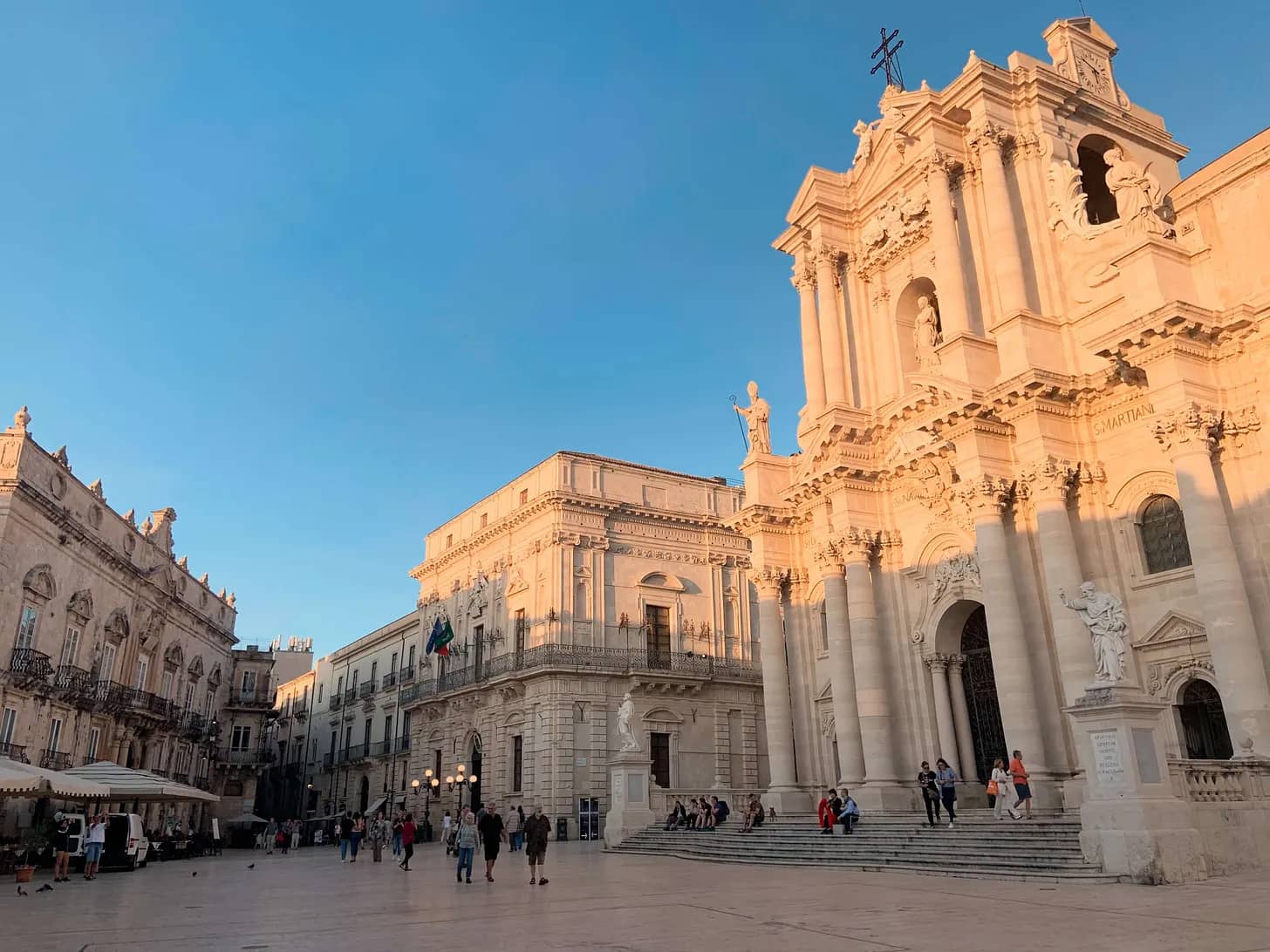
Syracuse is the only city in Europe where wild papyrus grows. The same plant as the Nile. It grows at the Fonte Aretusa: a freshwater spring that surfaces right next to the sea.
The Greeks founded their colony there because of that spring. And they left behind one of the most beautiful cities in Sicily: Ortigia. An island within an island.
The cathedral was built on top of a 5th-century BC Greek temple dedicated to Athena — the Doric columns are still visible from inside. In Italy, that barely raises an eyebrow.
What surprises you about Ortigia is everything else.
The streets, lined with papyrus artisan workshops. The marble piazza. The market where you eat charcuterie boards, impossibly generous panini, and leave carrying bags of capers. All of it wrapped by a medieval seawall where, at night, the waves hit the stone.
That is the most meditative sound we’ve ever heard. Isn’t it worth slowing down for a few days in the middle of Sicily’s frenzy just to listen?
Short Detours
In Modica, you can taste an Aztec recipe the Spanish brought to Sicily: the sugar never fully melts, so the chocolate stays grainy. It’s a 16th-century recipe. No one else in Europe makes it this way.
On March 25, 1867, a tailor’s son was born in Parma. At 19, he was pushed onstage in Rio de Janeiro to conduct Aida — from memory. Arturo Toscanini never stopped conducting. He also never played the fascist anthem. The Blackshirts beat him for it. He left for New York. Einstein wrote him a thank-you letter.
Before you go
What I am reading: Buzz, Sting, Bite by Anne Sverdrup-Thygeson — a biologist making the case that everything in nature is connected to everything. Including, I suppose, a Nile papyrus that decided to grow in Sicily.
Originally published in The Detour on 31 March 2026.
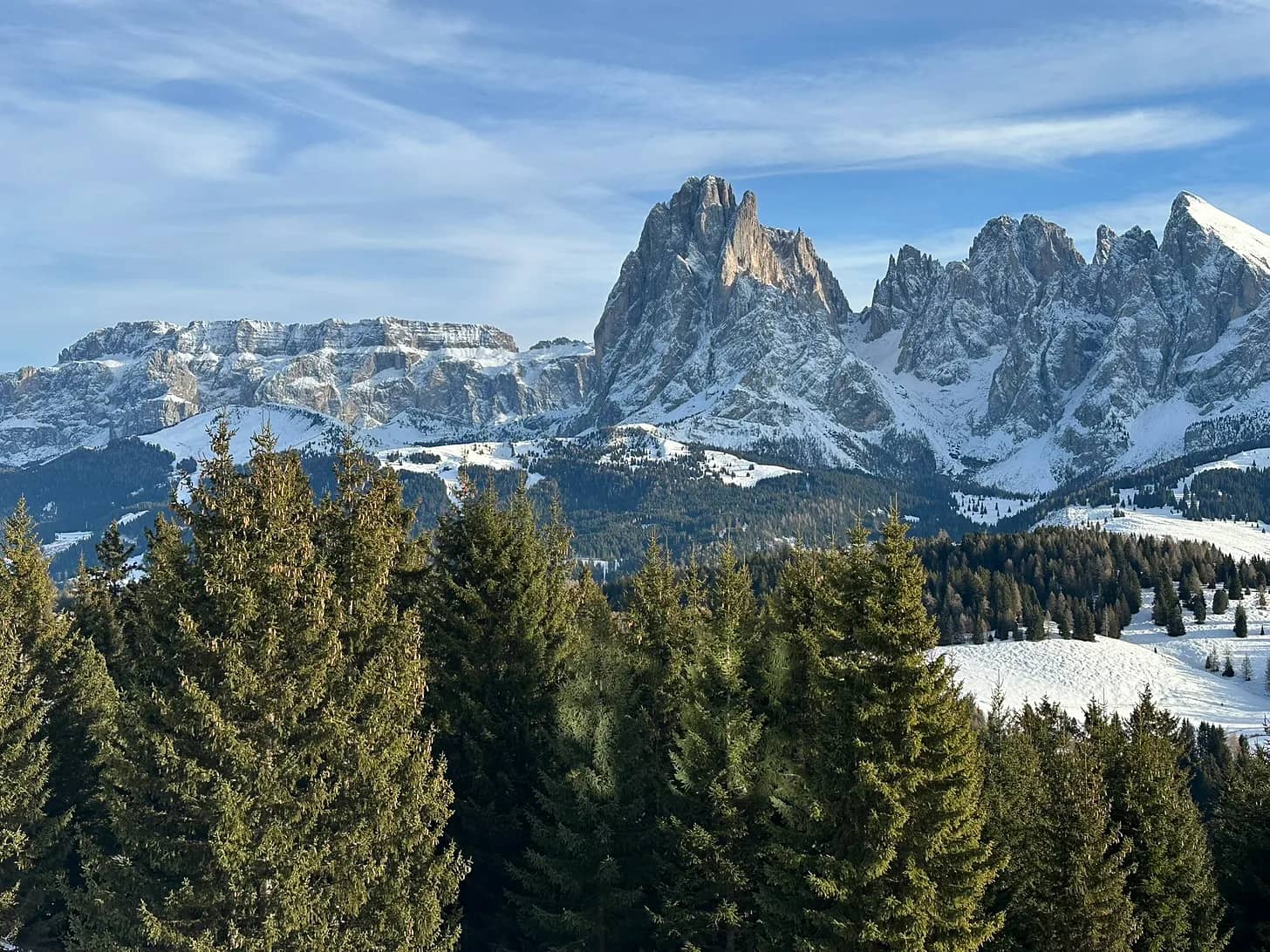
When Guides Are Not Enough (and Why I Had to Return to the Dolomites)
There is a particular kind of frustration you only recognize when you travel with the ambition of truly understanding a place: arriving at a long-dreamed destination, confident after years of experience, and realizing that your system no longer works.
After entire summers of trekking in Patagonia, I had developed a solid, reliable method. Map studied, refuge selected, parking spots or buses identified, return time agreed upon, packed lunch and snacks ready. Without ever planning it, I had become a trekker. When I finally had the chance to experience the Dolomites, I knew it wouldn’t be so easy to apply the same framework. And yet, the iconic jagged peaks made one thing immediately clear: every mountain range has its own language — and I didn’t speak this one yet.
So how did I try to plan the trip? First, I turned to friends who were already regulars in the region. They advised me on where, among the countless villages, it made sense to base myself, and which mountain huts were worth visiting.
Then I bought a digital guide — which soon became two — both promising to give me everything I needed. I found beautiful photographs, hotel suggestions (I chose mine from there, an excellent recommendation), lists of villages, and a suggested seven-day circuit through the area. Despite actively searching for information, I left without really knowing what I would be walking — but with confidence.
When I finally arrived in Castelrotto, I was surprised. I expected to choose a trail, walk all day, and return exhausted. Instead, I encountered an entirely different system:
- Villages at every altitude
- Accommodation within the plateaus
- Mountain huts accessible by car or cable car
- Trattoria-style food in the middle of the mountains — a very welcome discovery
What no one had explained to me was this: the Dolomites are not a mountain chain in the classical sense, nor do they resemble the rest of the Alps. They are a constellation of isolated massifs, made of dolomitic rock, surrounded by an intricate network of valleys — many of them crossed by roads and connected through mountain passes.

In practice, the plateaus are vast green high-altitude valleys, traced by mostly flat paths, dotted with beautiful hotels and meadows inhabited by cows, sheep, and horses. A concrete example: Compatsch (1,844 m), the gateway to Alpe di Siusi. You arrive by car or cable car. From there, you can start walking… or take a carriage ride, or cycle. A nearly democratic form of access to altitude, offering extraordinary views without extreme physical effort — sometimes even from your hotel pool.
The trip was unforgettable. And yet, something didn’t quite add up. Autumn fog concealed the sharp peaks, and I still didn’t fully understand the system. The green, reflective lakes were a pleasure, but something was missing.
Of course, I went back. This time during Christmas week, a classic Italian settimana bianca. I decided to focus on a smaller yet central area: Val Gardena. At a cable car station, I stopped in front of a topographic map mounted on the wall. I mentally traced each peak: Sassolungo, Sella, Langkofel. Then I stepped outside and searched for those same silhouettes from the viewpoint. Could I see them from here? Where did the trail go? In which direction was Bolzano? Perhaps a bit obsessive for my companion — but I made sure the information settled.
This process — observing, returning, building a system — is exactly what I do professionally. In Italy, Argentina, Patagonia, Mexico. I don’t assemble lists of must-see places and arrange them into days. I design a mental map to read a territory the way I read it myself. So that when you’re standing in Compatsch, looking at Sassolungo, you understand why that plateau exists, how it connects to the surrounding area, and what it reveals about Dolomitic geology.
There is something deeply counterintuitive about this. We live in a world where Google Maps tells us exactly how to get anywhere. Digital guides promise “everything you need.” YouTube offers step-by-step experiences so you can “live it” before you arrive. In that context, returning to a place simply to understand it better seems inefficient. But efficiency alone does not build understanding.
“Top ten” lists overwhelm us, hidden gems hide nothing anymore, and every corner of the planet has its guide. We are saturated with information, yet thirsty for comprehension.
Geographic logic, cultural rhythms, why one village sits higher than another — these details reveal themselves only with time, patience, and the humility to admit that the first time, you didn’t understand much at all. Knowing where to go is not the same as understanding what you are seeing.

The Dolomites reminded me of this once again: every place has its own geographic, cultural, and linguistic system. Understanding its differences — and the reasons behind them — is part of my obsession.
Not every trip requires this level of depth. But the ones that matter do. If you are planning your honeymoon, that once-in-a-lifetime fortieth birthday, or the single month of the year when you truly disconnect — this is that kind of journey.
—
Sole
PS: If you’d like to explore the area further, this carousel highlights the most iconic peaks, valleys, and villages of Val Gardena, one of the Ladin valleys of the Dolomites. And if you’re planning a trip, you can book a 30-minute conversation here. We’ll talk about your destination, your dates, and whether it makes sense to design it together.

A letter to the Riviera Maya I met in 2010
Corals that are gone, sargassum that persists, and why I keep designing journeys
I travelled with my father to the Riviera Maya in 2010 to complete our diving certification. We immersed ourselves in what was known as the second largest barrier reef in the world. Four unforgettable dives: we swam alongside giant turtles, crossed natural tunnels formed by coral, and, while parasailing, saw from the air the immensity of the Mexican Caribbean, with its turquoise, cobalt blue and emerald green stripes.
During four days of training, I paid 400 dollars to learn how to breathe underwater in front of such wonder. The phrase —“second largest barrier reef in the world”— I had found the night before on Wikipedia, thrilled to have such a treasure just nine hours from Buenos Aires. It felt like a privilege to see it, to have it here in the Americas.
Tour operators preferred other adjectives: “crystalline waters”, “unique biodiversity”, “unforgettable experience”.
I learned that nitrogen can kill you if you ascend too quickly, that moray eels may mistake your finger for a fish, that you should never touch coral. Nobody mentioned that the coral we were told not to touch was already dying. Silence was part of the product. We had paid for a dream, not for an ecology lesson.
Cozumel, with its famous coral walls, remained pending. But even then we knew the reefs were in danger.
The return and the invisible brigades
I went back in 2017, this time to Tulum, though I didn’t dive. Armed with Google Maps and determined to avoid crowds, I found a beach labelled by algorithms as a “hidden gem.” At six in the morning, waiting for the sunrise, I discovered another scene: cleaning brigades.
Four men with rakes and a pickup truck collected mountains of algae before the first tourists arrived. They worked silently, efficiently, invisibly. When I asked, one said: “It’s temporary, miss. Just currents.” But his eyes said otherwise. It was 2017 and sargassum had been arriving for six years. How long does “temporary” last when no one dares to name it?
Living in Mexico, I learned that sargassum was no longer a seasonal inconvenience but a crisis shaping every conversation about Caribbean tourism. The question was no longer if it would come, but how to hide it.
The new Caribbean vocabulary
I learned a coded language of the industry:
- “Variable natural conditions” (there is sargassum).
- “Authentic Caribbean experience” (you’ll see the reality outside postcards).
- “Coastal renewal season” (do not come these months).
- And the most perverse: “Opportunity to discover other attractions.” As if ecological collapse were an invitation to buy more tours.
What caught my attention: the conversation always focused on economic impact. Almost never on environmental effects. And rarely on the reef itself.
The sargassum belt
Since 2011, beaches once ranked among the cleanest in the world have received tons of floating algae called sargassum. What first seemed like an anomaly became an annual pattern, with increasingly severe consequences.
Sargassum —Sargassum natans and Sargassum fluitans— has always existed, drifting in the North Atlantic as part of a healthy ecosystem. The problem is scale: excess nutrients from the Amazon and Orinoco, global warming, altered currents. All combined to form the Great Atlantic Sargassum Belt, a strip of more than 8,000 kilometres of algae —the size of 800 Buenos Aires— that drifts every year from Africa to the Caribbean.
It doesn’t just ruin postcards. It blocks sunlight corals need, releases toxic gases as it decomposes, alters water pH, and fosters bacteria competing with reefs. All this while the Mesoamerican Barrier Reef already suffers bleaching, acidification, and pollution.
In Martinique, a school was forced to close because of the gases. In Barbados, hotel occupancy fell 40% as sargassum was removed by truckloads. In the Lesser Antilles, fishermen fought with tangled nets. Yet on Instagram, the Caribbean still looked unchanged.
The questions that change
In 2010 I asked: Where’s the best visibility? At what depth are the turtles? Is the water warm?
Now I ask: Why is the water hotter each year? What stories are left untold? For whom does this paradise exist? Does my presence speed its decline?
Sometimes I think my diving certification was also a historical document: Certified Open Water Diver, Riviera Maya, 2010. Translation: authorised to explore a world that once existed.
Travelling to remember
Sargassum is not just an aesthetic nuisance. It is a messenger insisting on speaking while we perfect the art of not listening. Like climate change, it feels enormous, complex, ungraspable. But one thing is within our reach: stop looking away. Name what is happening. Remember. Because sometimes, remembering coral is also a way of trying to save it.
While the Caribbean learned to hide its wound, I sought another sea. On the Pacific, the Sea of Cortez revealed biodiversity the Caribbean had already lost. In La Paz —not in Cabo’s all-inclusive resorts— I swam with sea lions, watched manta rays leap, realised that balance is still possible in some places.
It is not that resort tourism is the only cause of collapse. But when a place becomes a stage for unreflective consumption —drinks, parties, selfies— it loses its ability to teach, to transform. And without transformation, why travel?
Journeys with memory
At HeySole! I design journeys for those who, like me, seek more than crystalline waters. For those who understand that travel is also about bearing witness, asking questions, creating conscious memories.
Because knowing a place is not only about where to eat the best ceviche or find the quietest beach. It is about understanding its silences, its transformations, its beauty and its wounds.
If this text made you think differently about how we travel, share it. Because remembering a coral is also a way of caring for it.

Learning to Challenge the Canon to Build Your Library (and Passport)
Reading and visiting the classics to develop your own taste
On my first European grand tour, I avoided the destinations that top most Latin Americans’ compass: Spain and Italy. I threw myself into -20 degrees, layers of snow I’d never seen, different cultures. It was entertaining from every angle. But only when I arrived in Italy the following year did I understand the magnet: it wasn’t just the romanticism of roots, it was the cultural density I had already sensed in books, the one I recognized from my education and heritage. Reading Dante, Cervantes, Virgil had been theory; in Italy it became landscape, and everything clicked.
Reviewing my library, I discovered that my first wave was, predictably, the canon we’re invited to read when diving into literature. There was García Márquez with his Macondo of cyclical violence, where magic was the only way to narrate Latin America. The Bloomsbury Group salons, where Virginia Woolf discussed how to live and write differently, and Huxley criticized with one foot inside. The North American fever of the twenties, between clandestine cocktails and sequined dresses. The critique of the continent’s bloody roots: Rulfo’s desert silence, Fuentes’ blood, Padura’s Havana. And before all that, Homer, navigating the Mediterranean of wandering heroes and endless journeys.
This is the undisputed foundation: it orients, gives clues, sometimes bores and sometimes ignites. But it’s the initial map that everyone must accept or challenge before drawing their own library. Most of the time, the canon becomes a lighthouse. From there we discover our own taste and deepen into a style of narrative (and travel). In my library, essay-novels shine, with The Magic Mountain and its thousand pages inviting me to debate about pre-WWI European cuisine. The great open book on the world map full of pins and desires is Rome, the city I’ve returned to twelve times. From the Roman world to the Renaissance, Baroque, and Republic, there’s no historical gap that doesn’t captivate me.
To fill myself with something, I need density. After readings and travels through the old and new world, I learned that what I enjoy goes beyond, that reflects as well as entertains, that has layers, and depending on life’s moment, can be enjoyed each time from a different angle.
I saw someone on social media recently wondering why Munich doesn’t figure in essential European itineraries, and I think the answer lies in the canon. The German narrative we learn leads us first to Berlin: the Wall, historical memory, the weight of the 20th century. But Munich is another Germany, equally dense: capital of Bavaria, mirror of its architecture, its gastronomic festivals and folk traditions. It knows how to embrace the present without denying the past. The reading that best reflects Munich in my library is, precisely, Thomas Mann. It combines Germanic roots, bourgeois elegance, tension with modernity, and that air of a city that drinks beer under chestnut trees while safeguarding Gothic painting collections, infinite libraries, and tech company headquarters. The Germany where tradition and modernity coexist in tension appears as a second layer, less evident but equally essential.

Indeed, building our own collection of books, stories, cultures, communities, cities, and landscapes requires audacity and energy. I don’t mean this snobbishly, but practically: it takes time, resources, and also curiosity.
Sometimes it even takes courage to answer uncomfortable questions when we stray from the route everyone expects: why are you reading that contemporary author and not Proust? Tuscany again when you haven’t been to Galicia? But that questioning Faust is mainly within us, with internal questions: do I invest my precious free time discovering if the French, Swiss, Italian, or Austrian Alps resonate with me? What if it’s all the same?
In that small example lies a world: which Swiss Alps am I talking about? The beauty and luxury of St. Moritz on the frozen lake, where horse carriages compete for prizes while we savor sparkling wine served by a waiter on ice skates? The ski and mountaineering life of Zermatt, the conscientious village where the few vehicles are electric, and the constant view of the Matterhorn reminds us that this is the nature we want to keep pristine?
Though I briefly visited St. Moritz three times, I would undoubtedly spend weeks and weeks in different seasons under the Matterhorn, walking its trails, gliding down slopes, discovering Italian faces and French peaks from above. It’s not that luxury discomforts me, but I didn’t find in it the vitality I found in Zermatt.
In photographs everything seems beautiful, no doubt. But living it, like turning the pages of a book, we discover what opens our curiosity. A curiosity fed by walks, questions to locals, readings, and where I find pleasure. The path can sometimes be heavy. There are fogs where we read or visit only because everyone else does. Soon comes that bloodhound moment when you smell what’s yours. By instinct, guided by booksellers, reader friends, travelers, or a curious friend like me, you can reach your truffle.
That’s how I found María Gainza: thoroughly porteña, art lover, social critic, autobiographical essayist who plays with literature. From the first pages of The Optic Nerve, I realized that those analyses of Buenos Aires museum artworks interwoven with slightly satirical autobiographical tales captivated me. The architectural beauty and political power of the Savoys’ brief kingdom that nevertheless unified Italy led me to Turin to eat gianduiotti (and white truffles in nearby Alba). Discovering these jewels, by myself, was worth every reading and every journey. The risk of being wrong is always in the air, but the reward is so great that I keep sniffing the wind, searching for the next treasure my nose will lead me to.
It’s not about collecting prestigious destinations or authors. It’s about recognizing what makes you feel more alive, more curious, more yourself.

What place or book made you understand you could draw your own map?
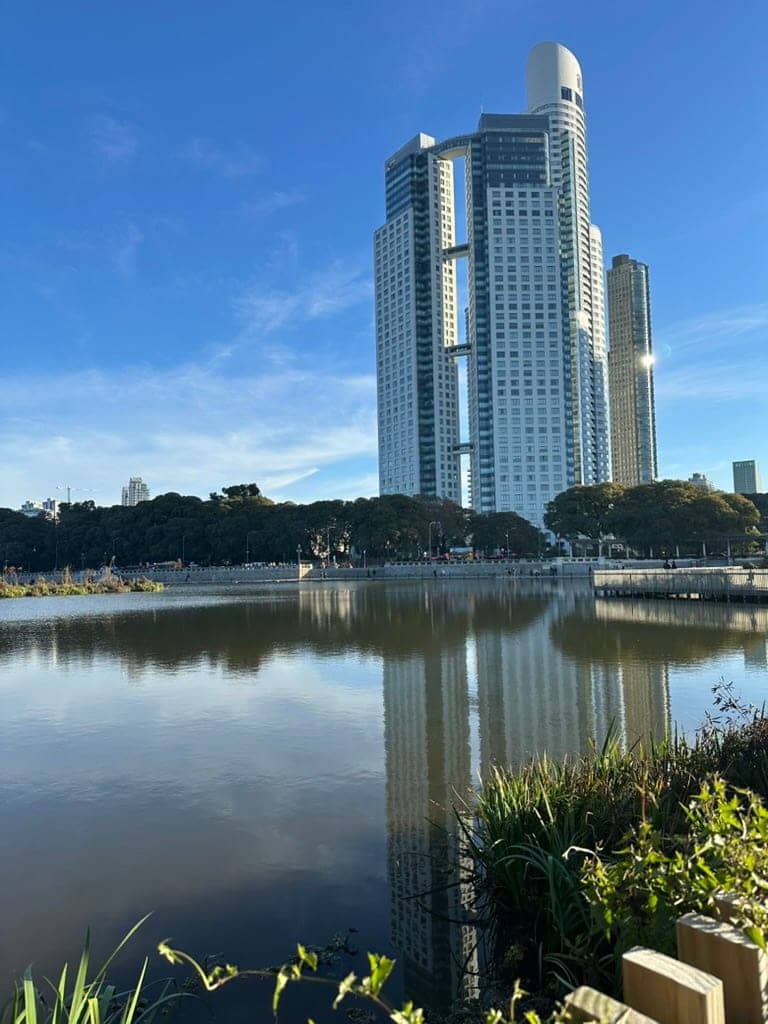
The Port That Was Born Old: When Buenos Aires Chose Prestige Over Function
A story of urban decisions, necessary failures, and the courage to reinvent
Did you know Buenos Aires chose to build a port that wouldn’t work just to look like Europe? This is the story of Puerto Madero: when prestige beat pragmatism… and how that “failure” became Latin America’s boldest urban transformation.
In 1882, two projects disputed not just the port of Buenos Aires, but the idea the city had of itself. Luis Huergo—engineer, pragmatic—proposed straight piers following the river’s geography: functional, economical, designed for a port-city growing from work. Eduardo Madero—nephew of Vice President Francisco Madero, well-connected—imagined closed docks Liverpool-style: symmetrical, ornamental, worthy of a capital that always looked to Europe before understanding itself.
The battle between creole pragmatism and imported prestige was won by Madero. Between 1887 and 1898, English architects John Hawkshaw and Harrington Hayter designed from London a port that Thomas Walker & Co. built with red brick docks that looked like industrial cathedrals transplanted from England. Armstrong Whitworth cranes presided over a beautiful but dysfunctional port: it was scenography before infrastructure.
By 1911 they were already building Puerto Nuevo following—irony of fate—Huergo’s ideas. In 1925, the last ships abandoned Madero’s docks. The port born to impress remained an urban relic: over 60 years of abandonment, with monumental warehouses taken over by entire colonies of rats, in the heart of a city that preferred not to look toward the river.
The Archaeology of Abandonment
My grandmother saw it from her ANMAT office: that landscape of abandonment Buenos Aires had naturalized. Brick warehouses bitten by humidity, metal structures rusting in the open, weeds growing between railway tracks. It was the exact reverse of the dreamed port: the place where the city stored its most visible failure.
For over half a century, Puerto Madero was the porteño urban unconscious. There lay the consequences of choosing appearance over function, prestige over pragmatism. The 1882 decision had become ruins, and the ruins had become normality.
But cities, like people, sometimes need to hit bottom to reinvent themselves.
The Laboratory of Reinvention
In 1991, when the Antiguo Puerto Madero Corporation—an unprecedented mixed management model in Argentina—decided it was time to transform that urban edge, it wasn’t just about recovering buildings. It was redefining what city we wanted to be. Again, geography as politics; urbanism as self-portrait.
My father moved near Puerto Madero in the late ‘90s, when cranes still drew the skyline and every walk was archaeology of the future. We went to watch the El Faro towers grow, to walk the Puente de la Mujer as if we were the first to step on it, to witness how the old Molinos silos became lofts with the Armstrong Whitworth cranes still present as silent witnesses of this place’s two eras: industrial and residential.

The parks with straight lines and millimetric grass were our laboratory of modernity: a Buenos Aires without broken sidewalks or improvised corners. But also something more: planned green spaces where there was only abandonment, pedestrian walks connecting the city with the river, cultural infrastructure democratizing access to contemporary art.
Because Puerto Madero isn’t just corporate towers and restaurants over the dock—though that’s the most sold postcard. It’s also the Fortabat Museum with first-class Argentine art, the Ecological Reserve that self-regenerated over rubble, the running paths where anyone can train for free, the Nereidas Fountain that migrated from Plaza de Mayo to find its definitive place facing the river, the historic frigate Sarmiento telling Argentine naval history.

Beyond the Tourist Postcard
Later I moved nearby and Puerto Madero became my morning running track, my green refuge in a city breathing concrete, my direct connection to the river without traffic light mediation. There I understood this neighborhood has multiple layers of use, not all visible in tourist guides.
At 7 AM, while waiters dressed as gauchos still sleep, Puerto Madero belongs to runners, dog walkers, retirees doing tai chi facing the river. At 8, it fills with office workers walking toward their mirrored corporate buildings. At 6 PM, it’s territory for families seeking free space for kids to ride bikes. On weekends, it transforms into a rest destination: picnics, bike rides, and mate.
Is it gentrification? Yes, also. But it’s more complex than that.
The Politics of Urban Transformation
Here’s the tension that defines Puerto Madero and, really, defines every successful urban transformation: can a space be simultaneously exclusive and inclusive? Can state planning coexist with private investment without one canceling the other?
For many porteños, Puerto Madero remains empty ostentation, a non-place that doesn’t belong to them, a real estate experiment disguised as a neighborhood. And they’re partially right: it’s expensive to live there, many restaurants target tourism, the aesthetics sometimes seem forced.
But it’s also true that where there was wasteland now there are 28 hectares of public green spaces within the Puerto Madero project. That Costanera Sur, which went from elegant beach resort in the ’20s to marginalized zone in the ‘70s, today is part of the largest green space complex in downtown Buenos Aires along with the 350-hectare Ecological Reserve. That Argentine art has an exhibition space (the Fortabat Museum) that didn’t exist before. That thousands of people can access the river in a city that historically turned its back on water.

One of the new walkways in the Ecological Reserve.
Puerto Madero’s true lesson isn’t that urban transformation is good or bad per se. It’s that cities, like living organisms, need to evolve or die. And that sometimes, paradoxically, the most resounding failure can become the most valuable opportunity.
Buenos Aires chose wrong in 1882. It built an English port on River Plate geography, prioritized image over function, bet on imported prestige over local innovation. The result was predictable: a port that didn’t work, obsolete before turning 40.
But that error became, a century later, the raw material for one of Latin America’s boldest urban transformations. Abandoned Victorian warehouses became lofts and cultural centers. Dysfunctional docks transformed into water mirrors multiplying the sky. Rusty rails became green paths.
The Geography of the Present
I insist Puerto Madero is to be lived: to breathe air coming from water, to see art between historic docks, to understand that sometimes a city needs to invent spaces where none existed. It’s not nostalgia or pure speculation: it’s geography of the present, a piece of Buenos Aires that dared not resemble any other.
Is it perfect? No. Is it inclusive? Not completely. Did it solve all Buenos Aires’ urban problems? Of course not.
But it did achieve something that seemed impossible: returning the river to a city that had forgotten it was a port. And that, in a metropolis of 15 million inhabitants, is no small thing.
Next time you walk through Puerto Madero—whether to run, see an exhibition, or yes, even eat at one of those restaurants overlooking the dock—remember you’re stepping on the materialization of a question all cities ask themselves: who are we and who do we want to be?
Buenos Aires took 109 years to answer it. But when it did, it built not just a new neighborhood, but a new way of thinking about itself.
And tell me: Do you have your own Puerto Madero experience? Or some place in your city that completely changed and generates mixed feelings? I love reading these stories in the comments.
If this story resonated with you, sha
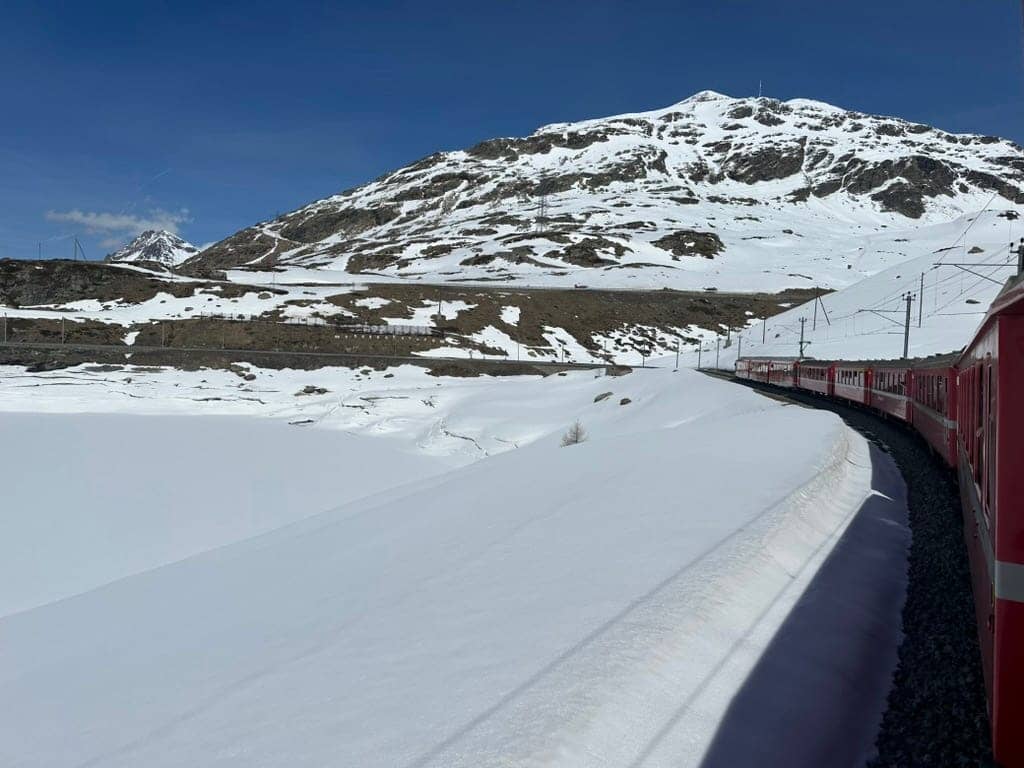
Switzerland at ease: trains, valleys and the elegance of a country that works without fanfare
slow logbook of panoramic trains, alpine villages and medieval fortresses. Beyond the clichés of watches and chocolate, Switzerland reveals its depth.
A nation of transitions
With four official languages and strong cantonal autonomy, there is no single Switzerland. Nor a single way to discover it. On this journey, we chose to avoid the big cities and focus on the south.
For two weeks we travelled on its famous trains: precise, elegant, silent. We added funiculars that climb mountains, cogwheel trains, and boats tracing routes along millenary shores. We discovered that Switzerland is understood through transitions: from one canton to another, from one language to the next, from snow to flowers, from silence to street fairs with live music. To understand Switzerland is to accept change as the rule, and contrast as its identity.
From Ticino to the line of glaciers
The route began near Lake Como, at the border between the canton of Ticino and the south of Graubünden, where we boarded the Bernina Express bound for St. Moritz.
The train climbs from Val Poschiavo, a green and Mediterranean region which, though fully Swiss, speaks Italian and lives at its own rhythm. Its agricultural terraces and gentle landscape contrast with the glacial world that opens up at altitude.

Crossing Ospizio Bernina (2,253 m) is not only the highest point of the route, but also a geographical threshold. Beside it, Lake Bianco—milky white from the minerals of the Palü glacier—contrasts with the darker Lake Nero, as if water itself spoke in different tones. Their colours tell a bifurcated story: the waters of the Bianco flow towards the Adriatic, while those of the Nero run to the Danube and the Black Sea. At this point, even the language shifts: we left Italian behind and entered the Romansh-speaking zone of Graubünden.
St. Moritz and luxury without belonging
In contrast with Italy, St. Moritz felt somewhat soulless. Perhaps because of the distance imposed by extreme luxury; perhaps because the snow season was ending. When belonging is measured through consumption, the place loses depth.
We preferred instead the image of the frozen lake yielding under the spring sun, and walking around it to see the mountains from every angle. It was a tactical pause: enough to observe without being absorbed.
The Glacier Express and history in motion
The following morning we boarded the Glacier Express, Switzerland’s most iconic train. For eight hours we did not simply cross the country: it was more than a journey, it was a display.
From the geometric void of the Rhine Gorge to the snow-covered Oberalp Pass where only the wind could be heard. In Disentis, the canton’s oldest monastery taught us that the word münster—familiar from Germany’s Black Forest—comes from the Latin monasterium: long before the Confederation there was life, frescoes, and onion-domed architecture.
In Trun the 14th-century peace treaty that gave birth to unified Switzerland was signed. In Andermatt, where trains, roads and tunnels converge, stands the Saint Gotthard Pass, the country’s backbone.
Every window of the train brought a new lesson: a typical dish (capuns), a 17-kilometre tunnel, an energy fact (60% of Swiss electricity comes from water, and nuclear plants will close in 2025). Each fact was not just information: it was part of the way Switzerland reveals itself. Everything had weight. Everything had form.
Zermatt: the alpine village par excellence
Arriving in Zermatt was entering another dimension. The Matterhorn, omnipresent, seemed to guard not only the Italian border, but also the skiers still enjoying a long season. Late snow had piled up more than five metres, a mantle that still descended the slopes.

We walked among ancient dark wooden houses with stone bases, not only in Zmutt but also in the village centre, where ancestral forms coexist with the technical sophistication of the present.
On the hikes towards Furi we passed through two hamlets where we learned that these 15th-century structures—mountain shelters for shepherds and peasants—were raised on pillars with round stones designed to block rodents. Their larch walls, blackened by time, remain firm; their stone-slab roofs protect the buildings through centuries.
A small museum on high-altitude farming taught us about rye, transhumance and the harsh life of those who lived here long before tourism. Switzerland was not always wealthy: it was, first, resilient.
The transport systems to the summits are feats of engineering that operate with almost invisible elegance. The modern, silent Matterhorn Glacier Paradise cableway took us up to 3,883 metres: the highest point in Europe accessible without climbing. From there, with temperatures below zero, we looked over more than thirty 4,000-metre peaks and fourteen glaciers stretching across Switzerland, Italy and France.
By contrast, the old cogwheel train to Gornergrat carried us to 3,089 metres. The view opened to new peaks and other faces of the Matterhorn. We had planned to stay two hours but spent the entire day. Not only for the imposing presence of the Matterhorn, but for the amphitheatre of glaciers unfolding around it.
Accumulated snow blocked the planned trails, but revealed another way of seeing the mountain: the silence of the Gorner glacier, extended like a tongue that cracked and groaned as it descended, demanded pause. We picnicked on a bench among the ice, while alpine choughs tried to steal our lunch. We listened to the wind filtering between the peaks: a silence that was not absence, but the full presence of place.
We also visited the mountaineers’ cemetery, where the dates of the first expeditions spoke of risk, skill and will. Fascinatingly, we learned that while the Swiss side has permanent life, the Italian side has no settlements, though it hosts a dense network of slopes, refuges and high-altitude restaurants. A mountain “empty” of villages is, in fact, intensely lived through sport.
We shared a local soup with skiers arriving from the other side. Advertised in German as “grandmother’s soup”, it was more than food: it was a meeting point, a shared gesture in a landscape crossed on skis or boots.
Vaud and the Swiss Riviera
From there we packed to cross into the canton of Vaud. It was more than a language change. Everything softened: the Lavaux terraces, paths lined with wildflowers—and others meticulously planted—, boats anchored before Art Nouveau villages.
In Les Avants we looked for daffodils; in Clarens we descended on foot through lime trees; and on Lake Geneva we sailed on a Belle Époque steamboat still propelled by its original oil machinery, like a floating museum. Glasses of local wine served in deckchairs on the upper deck made the journey unforgettable.
Montreux surprised us with its floral display. Tulips of every shape and colour, arranged with almost curatorial aesthetics, turned the lake promenade into a moving garden. Running there at dawn was revealing: I saw bulbs being changed, new aromas rising from aromatic beds, spring organised with method and care.
Higher up, on the slopes, we saw what the late snow had hidden in Zermatt: transhumance. Sheep and cows with bells ascending to fresh pastures marked the season with ancestral precision.

Lavaux was perhaps the perfect summary of Swiss contrast: vineyards cultivated for centuries where 98% of the wine is consumed domestically. A local jewel thriving thanks to three suns: the one in the sky, the reflection from the lake, and the heat the terraces’ stones release at dusk.
Everything seemed to obey a secret logic: the logic of care.

Borders, fortresses and the art of passage
Before becoming a tourist destination, Switzerland was a passage: a geography to cross, but also to defend. We visited castles such as Chillon, on Lake Geneva, and those of Bellinzona, whose fortified trio—Castelgrande, Montebello and Sasso Corbaro—speaks of a time when borders were not abstract lines but points of watch, toll and shelter.
In Bellinzona, their strategic arrangement follows a logic of surveillance dating back to Roman times, perfected in the 15th century by the Dukes of Milan—first the Visconti, then the Sforza.
Further west, Chillon Castle controlled traffic along the narrow path skirting cliffs between Vaud and Valais. It is no coincidence that nearby lies the Saint-Maurice Pass, a historic gateway to the upper Rhône Valley.

These fortresses remind us that the Alps are not only a natural barrier but also a network of strategic corridors. Switzerland is a land of passes: Gotthard, Bernina, Simplon, Oberalp. Paths once used by people, armies and goods—sometimes slowly, sometimes stealthily, sometimes with warrior spirit.
Today, where customs stood, there are platforms. Where there was control, there is crossing.
Lugano and Locarno: the south also exists
Back in Italian-speaking Switzerland, Lugano reminded us that the south also exists. We walked its main avenue, among elegant shops and noble façades, down to Parco Ciani, where benches face the water with serenity. We rented a boat and crossed beyond the Italian border: an unmarked frontier, visible in the tones of houses, the shape of hills, the music in the background.
We ended in Locarno, between a food-truck fair in Piazza Grande and the solemnity of the Santuario della Madonna del Sasso. Built after friar Bartolomeo Piatti claimed to see the Virgin on the rock in 1480, the sanctuary rises above a town that today combines baroque masses above with street food below. That simultaneity—between the elevated and the earthly, the Swiss and the Italian, the precise and the lived—was perhaps the best synthesis of the trip.
Valle Verzasca: a Switzerland without showcases
We closed the journey in Valle Verzasca, built around the emerald river that gives it its name. Its stone villages are spanned by the Ponte dei Salti, a medieval two-arched bridge at Lavertezzo that seems drawn from a tale.

On the hike to Sonogno waterfall we encountered sculptures carved in tree trunks: part of an artistic trail linking nature, culture and contemporary art with deep respect for the alpine surroundings. A more authentic farewell. More rural. A Switzerland without showcases.
Travelling through Switzerland is not following a straight line. It is accepting that countries are also narrated in layers: by trains, yes, but also by valleys; by impeccable infrastructure, from a punctual bus to a funicular floating among peaks; and by the way everything integrates into the rhythm of landscape.
Switzerland does not impose itself: it works with precision, but it is felt with wonder.
If this read made you want to travel at a slower pace—or to look differently at the world you already know—share it with someone who also appreciates slow rhythms, good trains and stories told in layers.
My itineraries are designed for that: to make you feel, be amazed, learn, and return with memories that cannot be bought.
If you are dreaming of your next journey, write to me.
Want to receive my newsletter? Subscribe to "El Baùl Cultural" on my Substack!
A weekly space for reflection where I share my experiences, expressed through my passions: reading, travel, film, art, politics, and technology.